

Discussion and examination:
You describe what you would like to change or preserve. We assess your teeth, gums, bite and existing restorations. Photographs or models can document findings where useful for planning.
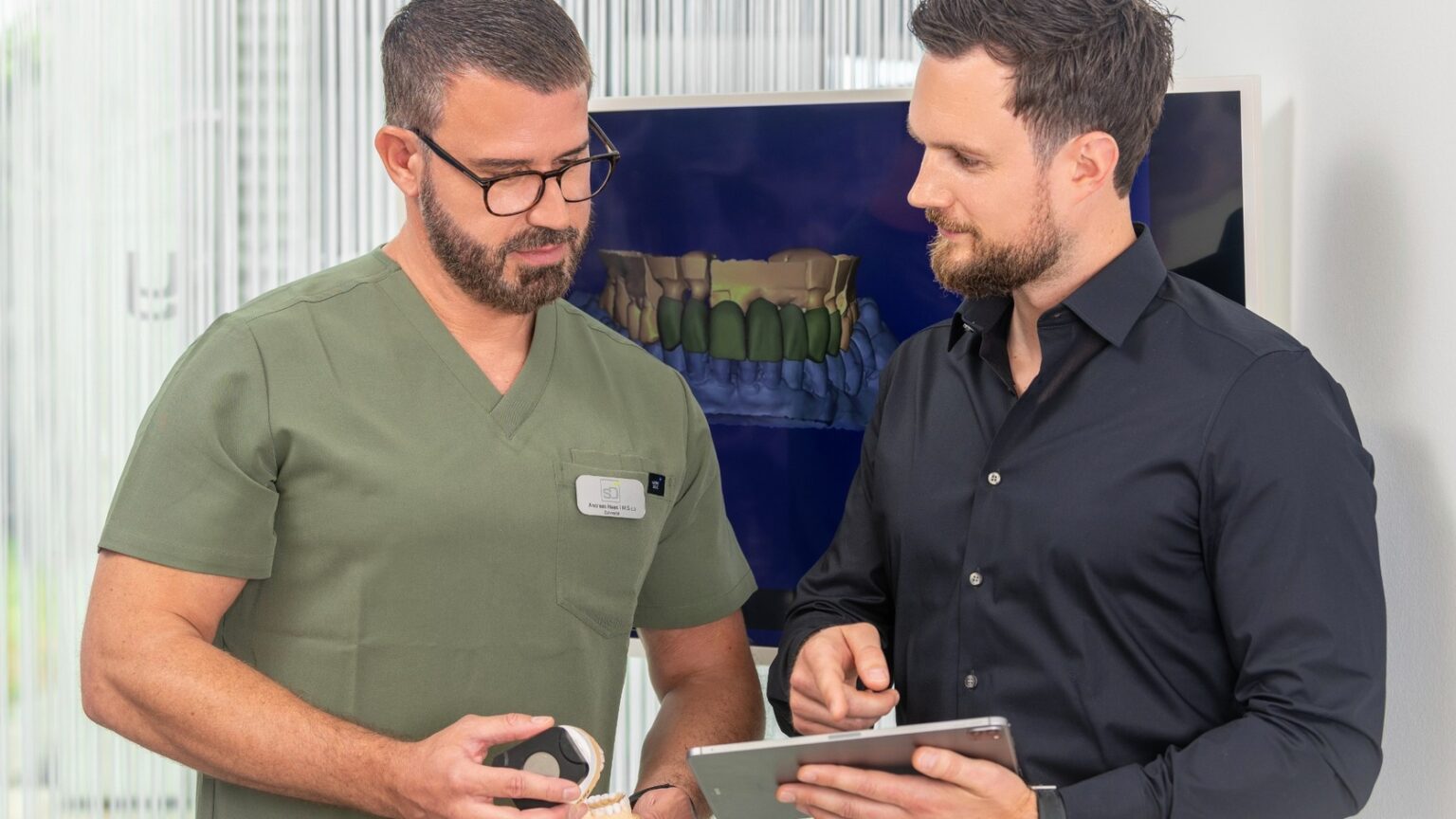
At smileDentity in Dreieich, planning starts with your wishes and the dental findings. Aesthetic analysis considers your face, teeth and gums together; Smile Design can then illustrate planned changes. Dental health, your bite and suitability for everyday life remain important. The appropriate steps depend on your starting point. Our overview of aesthetic dentistry puts possible treatments into context. An analysis does not commit you to any treatment.
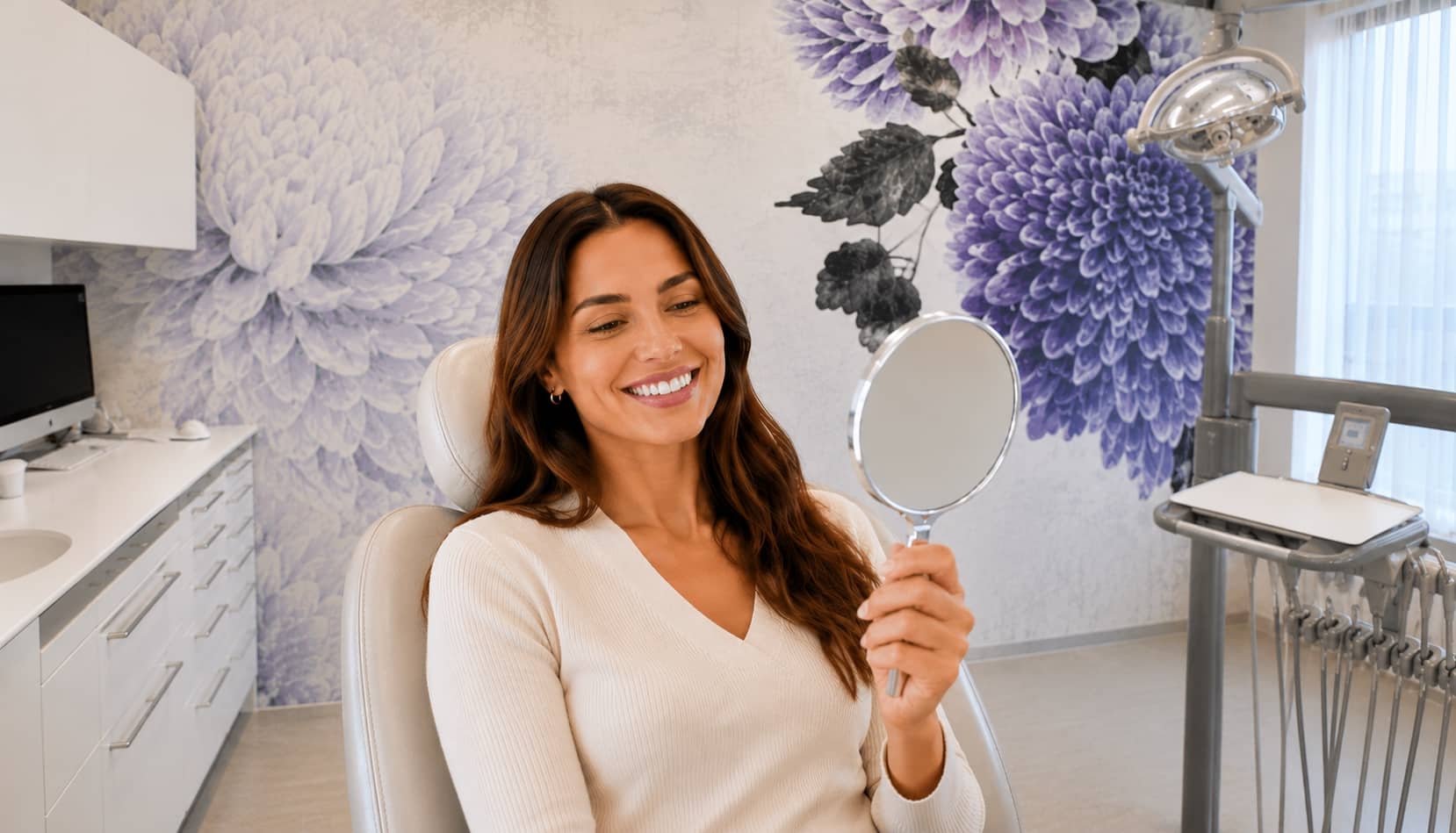
We first consider the facial component, including facial features, lip position, lip line and smile line. The dental component includes tooth shape, position, colour and midline. The gingival component describes the gum contour and its relationship with the teeth. Only their interaction shows whether a particular feature should be treated at all. The literature identifies several measurements for this, but no universal ideal for every face. [1]
When planning treatment, we consider the findings alongside your oral function and wishes. Proportions provide guidance rather than a rigid standard. An achievable result that feels right for you may be more appropriate than a theoretical optimum. Existing fillings, restorations, gum conditions and loading can limit the options.
We clarify in advance whether we charge separately for the basic aesthetic analysis and digital photographic assessment as part of your aesthetic restorative treatment, and which services your appointment includes. Before any additional chargeable planning, we discuss which models, images or simulations are needed and the costs involved.
A diagnostic or additive wax-up may go beyond an initial analysis. The scope, possible out-of-pocket costs and any reimbursement depend on the specific plan and your insurance. You receive an individual cost breakdown before deciding; a general fixed price would not be meaningful here. [4]
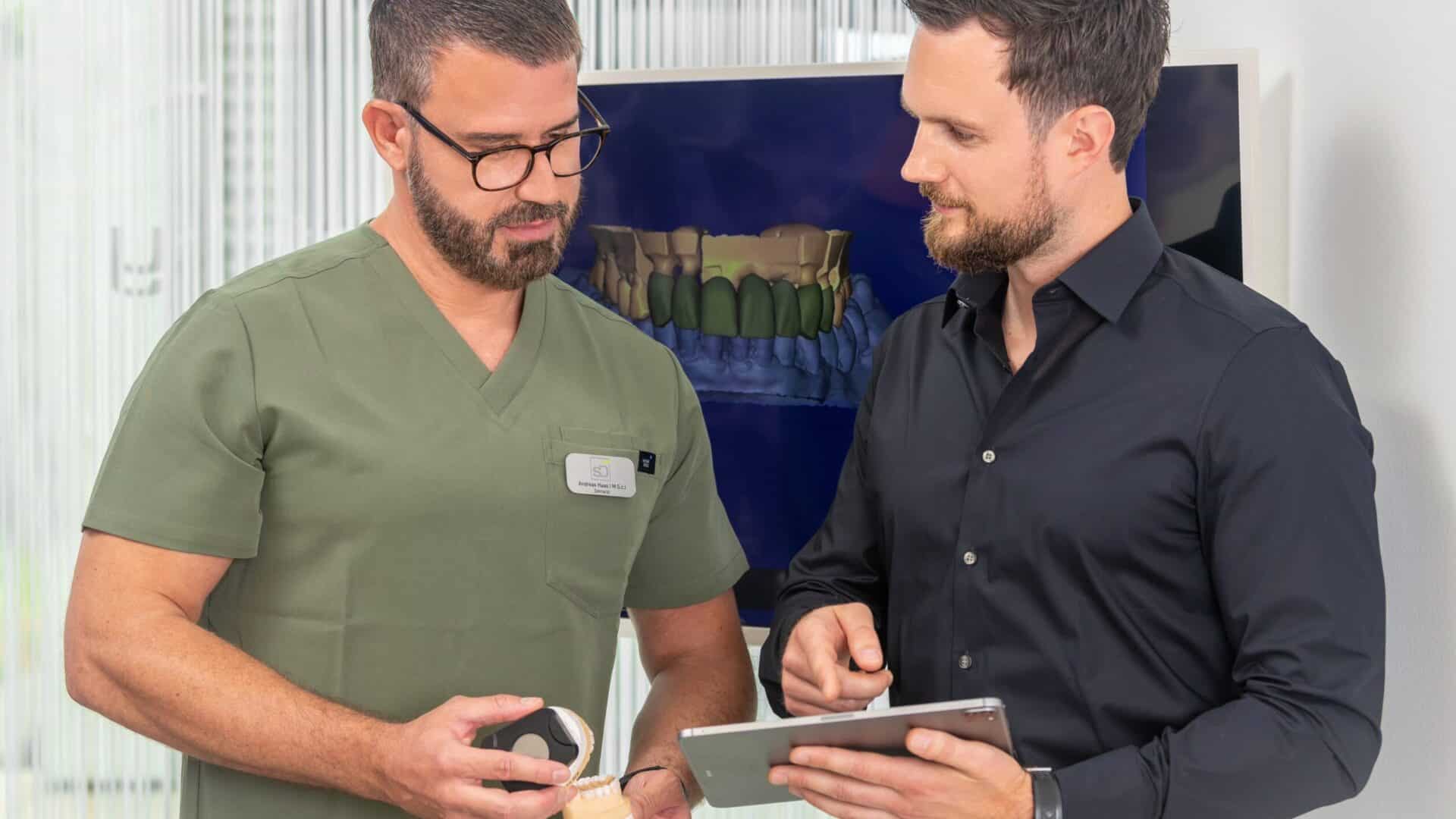
Facial component: Facial features, lip position and curvature, lip and smile lines, bite height and the height of the lower third of the face influence how teeth appear when speaking and smiling.
Dental component: The arrangement of the teeth from the front and side, shape, colour, dental midline, relationship between incisors and gums, and contact points are assessed together. Existing damage or restorations form part of the findings.
Gingival component: Gum height and contour, the gingival zenith, spaces between the teeth and the tooth–gum unit can affect the overall appearance. The cause of any unusual features needs to be established before discussing corrections. Not every difference requires treatment. [1]
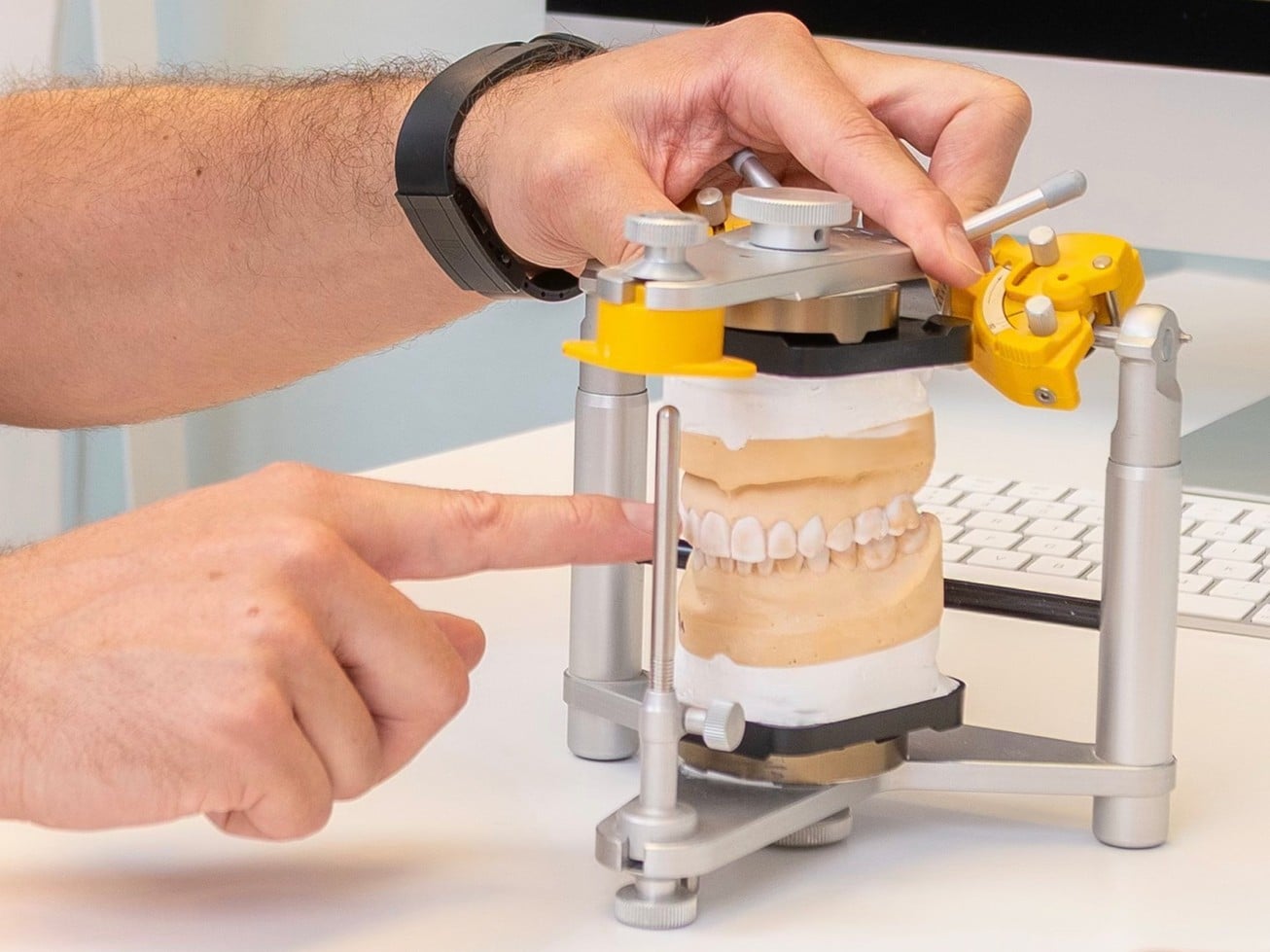
A diagnostic wax-up first models a possible tooth shape on a model or digitally. A mock-up can show this plan provisionally in the mouth. This allows proportions, the relationship with the lips and your wishes to be discussed before deciding on treatment. The visualisation must fit the actual conditions in your mouth; an attractive model alone is not enough. [2]
Digital Smile Design methods can support communication and planning. We discuss which methods to use in your case after examination and assessment of the work involved. [3]
You describe what you would like to change or preserve. We assess your teeth, gums, bite and existing restorations. Photographs or models can document findings where useful for planning.
The analysis distinguishes aesthetic wishes from findings that require treatment. Together, we discuss which changes are realistic, what alternatives exist and when no treatment is needed for now.
For extensive work, a wax-up and mock-up can support communication. These replace neither examination nor information about procedures, limitations and costs. Only then do you decide on the next step.
A photograph, model or digital visualisation shows a possible direction. It does not in itself capture how teeth, gums and the bite will respond to later treatment. We therefore compare any visualisation with your clinical findings. Available research mainly describes its value for planning and communication; the number of suitable clinical studies is limited. [3]
Not every aesthetic wish calls for veneers or dental restorations. Depending on the cause, monitoring, professional cleaning, a colour correction, a direct composite restoration or an orthodontic assessment may be appropriate. Some wishes can only be partly achieved; others would involve unnecessary loss of tooth structure. We explain the aesthetic treatment options separately from the analysis.
If invasive treatment is being considered, we separately discuss benefits, risks, preservation of tooth structure, care and possible later repairs. You can also decide against a proposed change. Your priorities are part of the planning; a supposedly ideal proportion must not replace them.
Already have a treatment plan and want to understand your options and alternatives better? Find out about our second dental opinion.
Andreas Haas, M.Sc., combines aesthetic assessment with examination of the teeth, gums and oral function. He discusses your goal and the findings with you. We assess whether a small correction, all-ceramic reconstructions or another solution is appropriate after the examination.
We explain the planned process, limitations and alternatives. Further specialist steps may be needed as part of treatment. A visualisation supports discussion; the actual result may differ. Please bring questions or examples so that we can discuss your expectations in specific terms.
Aesthetic analysis describes the starting point: the face, teeth, gums and oral function. Smile Design uses this information to plan possible changes and, where appropriate, visualise them. The two may belong together, but neither constitutes a decision to have veneers or any other treatment.
No. The planning needed depends on the findings and scope. A discussion and clinical examination may be sufficient for a limited correction. Photographs, models, a wax-up or mock-up may be helpful only for complex work. Additional steps should offer a clear benefit for your decision.
A mock-up can provisionally illustrate shape and appearance. Materials, gums, the bite and technical implementation can change the eventual result. We therefore assess the trial in the context of your smile and discuss its limitations. [2]
Lip movement and the smile line determine how much tooth and gum is visible. Gum height and contour affect proportions. Differences are not automatically a reason for treatment. The cause and your wishes determine whether a change is appropriate. [1]
No. We choose documentation and planning aids according to the question being addressed. Photographs can record changes and facilitate discussion; models or simulations are more likely to be considered for extensive planning. We explain in advance which images we will take and how we will use them.
Before your appointment, please clarify with us which services the basic analysis and digital photographic assessment include and whether we charge for them separately as part of your aesthetic restorative treatment. Additional models or wax-ups may incur charges. You will receive an individual breakdown.
You receive an assessment of the findings, possible steps and alternatives. Depending on the situation, monitoring or another dental treatment may initially be appropriate. For planned treatment, we discuss its scope, risks, care and costs. You make your decision only after receiving this information.
Specialist literature on dentofacial analysis and planning, and patient information on costs.
Sources and links last editorially reviewed on: 20 October 2026.
Would you like to know which changes suit your smile? During a consultation, we discuss your wishes, assess the starting point and clarify appropriate planning steps and possible costs.
Medical review of the German source: Clinical approval confirmed on 31 October 2026 by Andreas Haas, M.Sc. (dentist at smileDentity Dreieich).
The cost arrangements for aesthetic analysis, including the cost answer in the frequently asked questions, were reviewed and approved in the German source text by Andreas Haas, M.Sc., on 31 October 2026.
You need to load content from reCAPTCHA to submit the form. Please note that doing so will share data with third-party providers.
More InformationSpam protection for our contact form
We use Cloudflare Turnstile to prevent automated enquiries. With your consent, your IP address and browser information are transmitted to Cloudflare.
Your consent is saved and can be withdrawn in the cookie settings.
Privacy information