

Endodontics / Root Canal Treatment: Symptoms, Treatment Methods and Procedure
"Tackling the problem at the root" – a saying that can be taken literally in endodontics.
Many patients ask themselves in advance: endodontics – what exactly is it? In short, this treatment serves to preserve your natural teeth when the dental pulp inside has become inflamed.
Endodontology, also known simply as endodontics, is a specialised field of dentistry concerned with the interior of the tooth. The most common therapies in this field are root canal treatments.
The prejudice against endodontics: why there is no need to fear a modern root canal treatment

Due to growing health awareness, tooth preservation is increasingly at the centre of many patients’ interest today. Unfortunately, patients usually associate root canal treatment with very severe pain. What many people do not know is that neither such treatment nor the period afterwards has to be painful.
Slight pressure or a dull, unfamiliar feeling for a few days after treatment is a good sign and merely reflects the healing process taking place. For some patients, a mild painkiller may be advisable in such cases, but experience shows that it is usually not needed. At smileDentity, you will receive detailed information about the treatment and your specific diagnosis. This also includes how to behave after treatment and any side effects that may occur.
In a highly acute form of an inflamed dental nerve, however, an initial root canal treatment can sometimes be very painful after all. This is because the injected anaesthetic is transported away very quickly from the extremely well-perfused, inflamed area.
To make this phase as painless and short as possible for you, at smileDentity we rely on experienced practitioners and modern, particularly gentle anaesthesia methods, such as our computer-controlled STA® Single Tooth Anesthesia.
When is root canal treatment necessary? (Typical Symptoms)
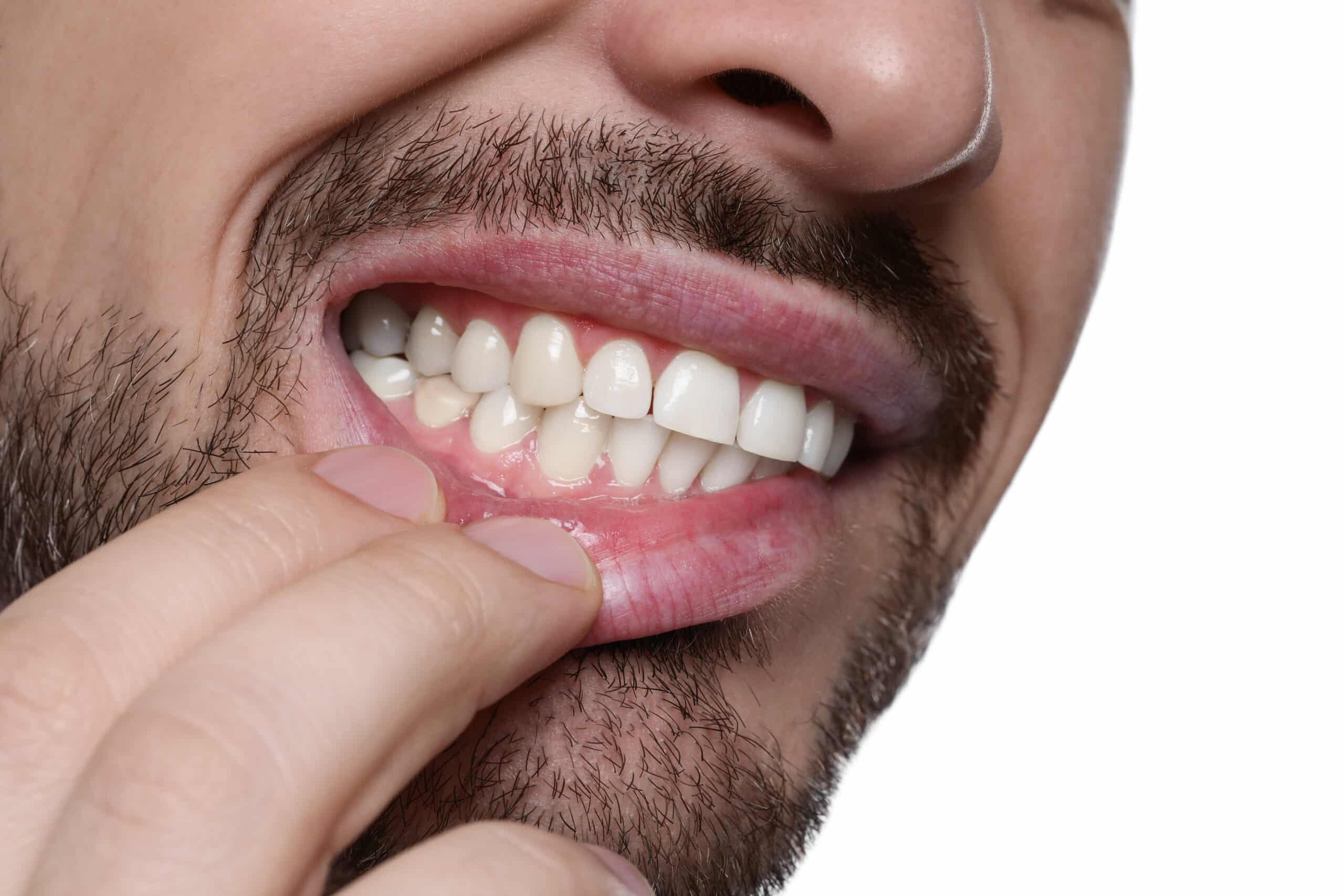
Inflammation of the dental nerve (pulp) usually announces itself through clear warning signs. Typical symptoms for which you should visit our dental practice in Dreieich promptly are:
Severe, often throbbing or pulsating toothache
Pronounced sensitivity to extremely cold or hot food and drinks
Noticeable pain when biting down on or touching the tooth
Swelling of the gums or the surrounding tissue
Sometimes, however, inflammation of the dental pulp is painless and is only discovered during a routine examination using gentle digital X-rays.
Our precise path to tooth preservation: the endodontic procedure at smileDentity
Up to a certain degree of destruction, your own tooth is better than an artificial one. An irreversibly damaged or inflamed tooth can be saved by root canal treatment: the inflamed nerve is completely removed and all root canals of the affected tooth are perfectly cleaned in order to stop the inflammation.
For maximum precision and success, our practice uses proven quality standards that decisively improve the treatment result:
Rubber dam protection: Before treatment begins, we stretch a thin elastic rubber sheet around the affected tooth. This shields the working field from the rest of the mouth, keeping it free of saliva and bacteria, and prevents rinsing solutions from being swallowed.
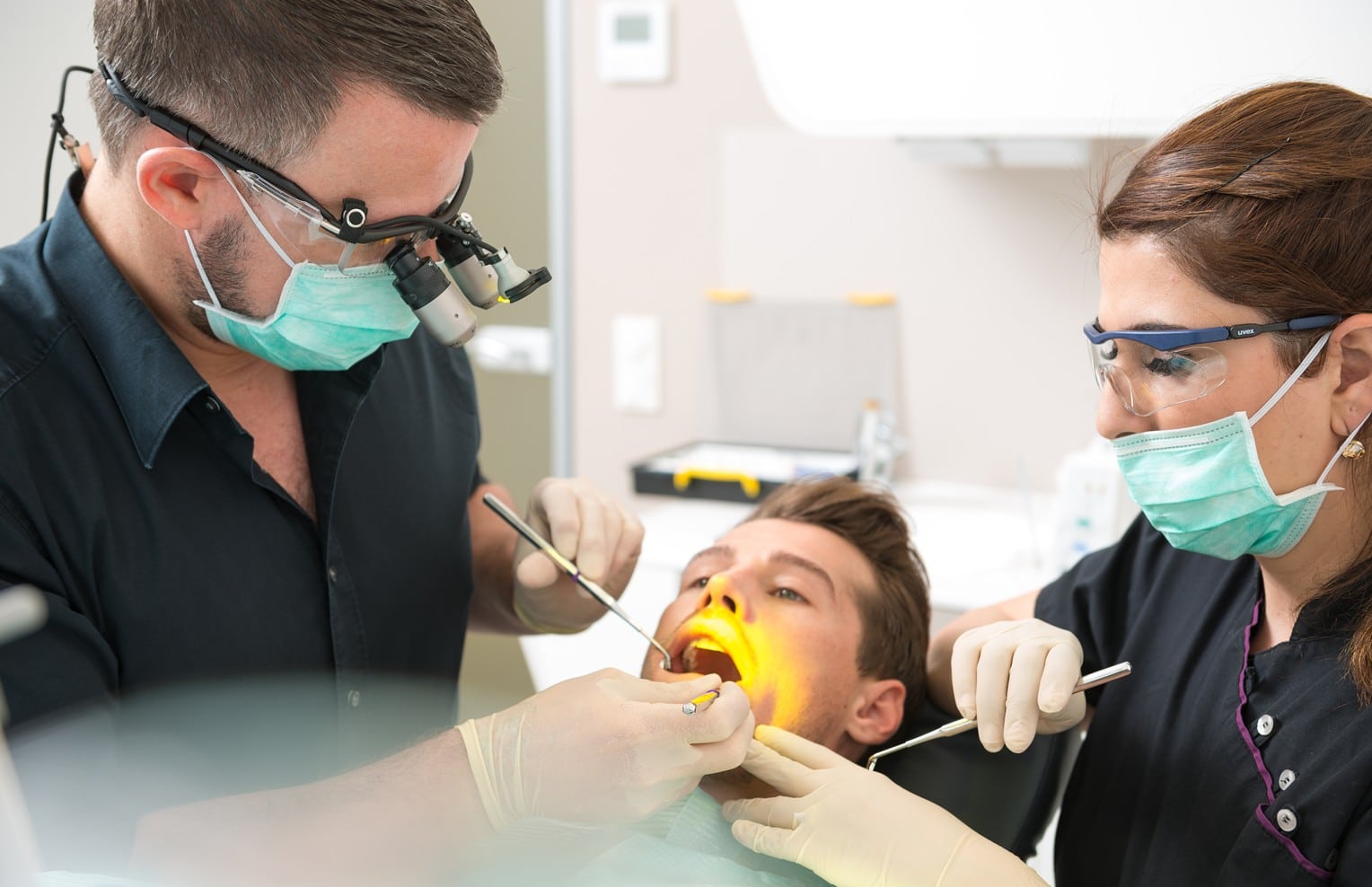
Precision with magnifying loupes: The fine branches of the root canals are barely visible to the naked eye. Under optical magnification with magnifying loupes, we can precisely visualise and treat even the tiniest canal structures.
A completely germ-free state of the root canal system is achieved through physically activated antiseptic irrigation and targeted laser therapy.
Electronic length measurement and mechanical preparation with high-quality nickel-titanium instruments make it possible to fill the canal system exactly to the root tip, the so-called apex of the tooth.
Only a completely germ-free state and three-dimensional filling with a thermoplastic sealing material up to the apex ensure the preservation of the tooth in the long term.
After root canal treatment: what happens next
A successfully completed root canal treatment is usually followed by prosthetic treatment. In many cases, a restoration with at least a partial crown is a must. As long as the root-treated tooth is not sufficiently stabilised and protected, there is a risk of fracture and thus of tooth loss.
If the root canal treatment and the subsequent prosthetic treatment have been successful, a tooth treated in this way can in principle be preserved just as long as teeth that have not had root canal treatment – ideally, therefore, for a lifetime.
Revision treatment: a second chance for the tooth
Very often, teeth that have already had root canal treatment are the cause of recurring pain. This so-called recurrence occurs when bacteria have either remained in the already treated canal system or have re-entered it. Careful work from the outset reduces the risk of recurrence.
Inflammation, no matter where it is located, always represents a burden and a danger to the body. Even if a recurrence does not necessarily cause pain, it should definitely be treated.
In detail, the old root filling is removed, the canal system is cleaned and disinfected again, and a new root filling is placed. Revision treatment is not painful and, compared with other treatments, is rather boring. If the inflammation disappears after revision treatment, the chances of success for these teeth are very good.
Apicoectomy (root-end resection)
In an apicoectomy, the inflamed, recurrent area around the root tip is surgically removed together with the root tip. According to the latest findings, the indication for an apicoectomy has been severely restricted. This means: if freedom from inflammation has not been achieved through root canal treatment, the chances of achieving it through an apicoectomy are very low. Revision treatment is the therapy of choice here.
Extraction (tooth removal) as a last resort
In a few rare cases, however, extraction – pulling the tooth – is the more sensible solution. If the prognosis of a tooth is poor, for whatever reason, this compromised tooth should be removed promptly in order to stop the bone loss in the jaw caused by the inflammation.
Today, even after a tooth has been removed, there are very comfortable solutions (e.g. using modern implantology) for maintaining a closed row of teeth. In this case, the dentists at smileDentity will show you various treatment options.
Root canal infection: what happens when an untreated inflammation persists?
Unfortunately, inflammation of the dental nerve does not heal on its own. If the affected tooth is not treated in time, the tissue and blood vessels inside the tooth gradually die off completely. The bacteria then continue to spread unhindered, which can have serious consequences for your health:
Painful abscesses (“swollen cheek”):
A purulent inflammation forms at the root tip and spreads into the surrounding tissue. This often leads to severe, throbbing pain and visible swelling of the face.
Bone loss in the jaw:
The inflammation spreads to the surrounding jawbone. The body breaks down the bone in this area in order to evade the inflammation. As a result, the tooth loses its firm hold.
Burden on the entire body (focal infection):
Chronic foci of inflammation in the mouth often go unnoticed for a long time, but place a permanent strain on the immune system. Bacteria can reach other parts of the body via the bloodstream. Medical studies show that such unnoticed, protracted inflammations can increase the risk of cardiovascular disease or joint problems.
Unavoidable tooth loss:
Once the tooth structure or the surrounding bone has been too badly damaged, the only option left in the end is often removal (extraction) of the tooth.
Early root canal treatment is therefore the safest way to stop pain, protect your body from secondary diseases and preserve your natural tooth permanently.
Root canal treatment in Dreieich – endodontics with compassion, expertise and skill
Root canal treatments require a great deal of time, experience, expertise and skill. Since the morphology of every tooth is different, every root canal treatment is individually different.
Thanks to modern methods, the success rate of such therapy has increased many times over. Nevertheless, there is unfortunately no guarantee of the long-term success of this therapy.
Do you have any further questions?
Feel free to make an appointment with us – online and completely hassle-free. Alternatively, you can also reach us by email or telephone. We are always there for you personally!
Frequently asked questions about root canal treatment and endodontics (FAQ)
Endodontics is a branch of dentistry concerned with diseases of the tissue inside the tooth (the dental nerve or dental pulp). The aim of all endodontic treatments – above all root canal treatment – is to preserve your own diseased tooth in the jaw permanently free of pain and inflammation.
Thanks to modern, highly effective anaesthetics, root canal treatment is usually painless. At smileDentity, on request we also use computer-controlled, particularly gentle single-tooth anaesthesia (STA®) to deliver the anaesthetic directly to the affected tooth completely without pressure or pain.
The rubber dam protects the opened tooth from saliva and the bacteria it contains during treatment. The magnifying loupes enlarge the working field many times over, so that our practitioners can locate and thoroughly clean even the finest, hair-thin branches of the root canals. Both aids considerably increase the long-term success rate of the treatment.
Since the canal system of a tooth is highly complex and individually shaped, precise preparation takes time. Depending on the number of root canals and the degree of inflammation, you should allow about 60 to 90 minutes for one session. In some cases, two appointments are necessary to achieve complete freedom from germs.
Statutory health insurers cover the costs of basic treatment, provided the tooth is classified as worth preserving according to their guidelines. Modern additional services that increase the success rate – such as precise electronic length measurement, laser disinfection or thermoplastic root filling – are generally private additional services. We will advise you on this clearly and transparently in advance.