

Gum lift for gum recession
Understanding gum recession and treating it appropriately.
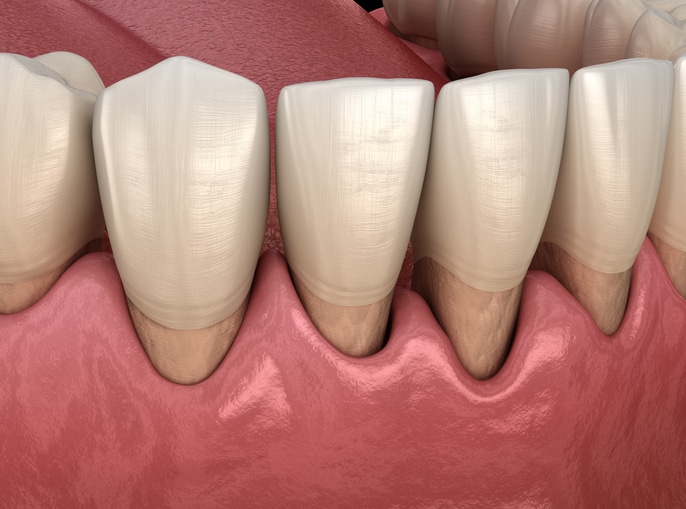
Exposed tooth necks can be sensitive and make teeth appear longer. At smileDentity in Dreieich, we describe treatment of receding gums as a gum lift: root coverage can cover exposed root surfaces, while thickening can augment soft tissue. This is part of periodontal surgery. We plan treatment according to your individual findings.
During the examination, we establish whether treatment is appropriate and how much coverage appears achievable. Not every case of gum recession requires surgery. We cannot promise complete restoration to the previous position.
Preserving gums and coordinating contours
At smileDentity, a gum lift means covering exposed tooth roots where the gums have receded. Correction of excess gum tissue is assessed separately.
A harmonious gum line forms part of planning in Smile Enhancement. We distinguish between too little and too much visible gum tissue: root coverage treats exposed roots. Recontouring excess gum tissue has a different aim and requires its own diagnosis. [1]
Occasionally, both situations occur at different teeth. We then consider function, gum health and the desired shape together rather than applying the same measure everywhere. Even outside the visible front teeth, sensitive root surfaces or very thin, irritated tissue may prompt a consultation. Our recommendation is based on symptoms, progression and findings, not appearance alone.
Causes and examination of gum recession
Gum recession is not a diagnosis of a single cause. During examination, we assess factors including:
- brushing technique and possible mechanical stresses,
- a thin tissue type and the tooth’s position in the bone,
- inflammation and tissue loss associated with periodontitis.
Several factors may combine. The examination records the depth and extent of recession, tissue thickness, tooth position, oral hygiene and tooth support. Whether supporting tissue has already been lost between the teeth is particularly important; this affects achievable root coverage. Where appropriate, existing or newly required X-rays supplement the findings. [4]
Before surgery, inflammation must be controlled and modifiable causes discussed. Smoking, medical conditions and medications are part of the history. Stable findings and achievable oral hygiene are important prerequisites for further planning.
Also tell us when you first noticed the change, whether the area is enlarging and when sensitivity occurs. This helps assessment. Photographs and comparative findings can document progression; visible appearance alone does not reliably reveal the cause.
How can gum tissue be repositioned or thickened?
Plastic periodontal surgery uses various techniques. Existing tissue can be moved, for example with a coronally advanced flap or tunnel technique. Depending on the starting situation, connective tissue, often from the palate, is added. Other materials may be considered in selected situations. We explain beforehand which approach is suitable for you; not every recession can be treated without a graft. [2]
The procedure is performed under local anaesthesia. The aim is to stabilise the tissue in the planned position. The extent, number of teeth involved and a possible donor site affect the work involved and aftercare. The term gum lift alone identifies neither a particular surgical technique nor a guaranteed treatment duration.
Soft-tissue improvement may also be considered around implants, for example by thickening tissue or augmenting keratinised mucosa. This separate indication is assessed according to the implant findings. Such a measure does not guarantee protection from later inflammation or implant loss. [3]
Alternatives include observation with monitoring, adjusted cleaning and measures to reduce sensitivity; where additional defects exist, restoration of the tooth-neck surface may be considered. These do not replace lost gum tissue but can address symptoms. Their benefits and limitations are weighed against surgery.
What matters after a gum lift?
Possible effects include pain, swelling, bruising, postoperative bleeding and a sensitive donor site. Further risks include infection, impaired wound healing, insufficient coverage and renewed recession. Colour or contour may also differ from the desired result. Complete root coverage depends on the starting situation and cannot be assured. [2]
We give you individual advice on cleaning, eating, physical activity and agreed follow-up appointments. During early healing, the operated tissue should not be mechanically irritated. Use aids or rinses only on our specific recommendation. Please contact us for persistent bleeding, increasing swelling, fever or worsening pain. Gentle oral hygiene and regular checks remain important in the long term.

How do we work at smileDentity?
After thorough diagnosis, Andreas Haas, M.Sc., discusses the findings, your wishes and suitable treatment options. The conversation includes achievable changes, alternatives and risks. A clinical focus on periodontology is part of his professional profile; individual assessment of your situation remains decisive.
Our dental hygienists support you with appropriate oral hygiene and also advise on dietary habits. This care accompanies treatment and helps reduce modifiable stresses. It does not establish a particular durability.
Before you decide, we explain the anticipated work and costs. These depend on factors including extent, technique, materials and possible tissue harvesting. Reimbursement depends on your individual insurance terms; clarify these using the treatment plan. We cannot promise a flat-rate price or cost coverage on this basis.
Gum lift: frequently asked questions (FAQ)
Lost gum tissue does not usually simply grow back to its original position. Adjusted cleaning and inflammation control can stabilise the findings. Whether surgical coverage is appropriate is assessed individually.
No. At smileDentity, a gum lift means covering exposed tooth roots where the gums have receded. With a gummy smile, a large amount of gum tissue is visible; the cause and suitable treatment must be assessed separately.
Not always. This depends on tissue thickness, the defect and treatment aim. A connective tissue graft may be appropriate but creates another wound. Options and alternatives form part of the individual explanation.
Local anaesthesia aims to make the procedure well tolerated. Pressure and individual sensations may remain. Afterwards, pain or a sensitive donor site is possible; we discuss support and suitable measures with you.
No. Tissue loss between the teeth, defect shape and healing limit the result. We discuss beforehand which change appears realistic. Later recession is possible even after initially good coverage.
Soft-tissue thickening may be considered where the implant findings are suitable. It is not a guarantee against implant loss and replaces neither inflammation treatment nor regular care and checks. The aim is defined for the specific situation.
Where findings are stable and there are no troublesome symptoms, observation may be a reasonable option. Examination of the cause is a prerequisite. We discuss what should be monitored and which changes would make another visit appropriate.
Sources and further information
The sources put root coverage, tissue conditions and treatment limitations into context. They do not establish a particular procedure at smileDentity and do not replace a personal examination.
- [1] American Academy of Periodontology: Chirurgische Verfahren, Patienteninformation
- [2] Cairo et al.: Rezessionsdeckung mit oder ohne Bindegewebstransplantat, 2016 (Studienabstract)
- [3] European Federation of Periodontology: S3-Leitlinie zu periimplantären Erkrankungen, 2023
- [4] Cortellini und Bissada: Mukogingivale Befunde, Diagnostik und Fallabgrenzung, 2018
Sources and links last editorially reviewed on: 20 October 2026.
Arrange an appointment.
Discuss sensitive tooth necks or changes in your gums with us. We show you the practice, answer your questions and explain suitable next steps after examination.
Medical review of the German source: On 28 October 2026, this content was reviewed by Andreas Haas, M.Sc. (dentist at smileDentity Dreieich) for medical accuracy, currency and scientific basis.