


STA® Single Tooth Anesthesia
Computer-controlled anaesthesia – tailored to your treatment.
Do you fear the anaesthetic injection more than the treatment itself? Please tell us. At smileDentity in Dreieich, we use STA® from Milestone Scientific with The Wand handpiece for computer-controlled local anaesthesia. The system delivers the anaesthetic in a controlled manner; a fine injection needle is still necessary. It is one of our options for Dental anxiety. Whether targeted single-tooth anaesthesia is appropriate depends on the findings and the planned procedure. [1]
STA stands for ‘Single Tooth Anesthesia’. Our aim is effective local anaesthesia and an injection that is as comfortable as possible. We cannot promise complete freedom from pain or a particular effect. [2]
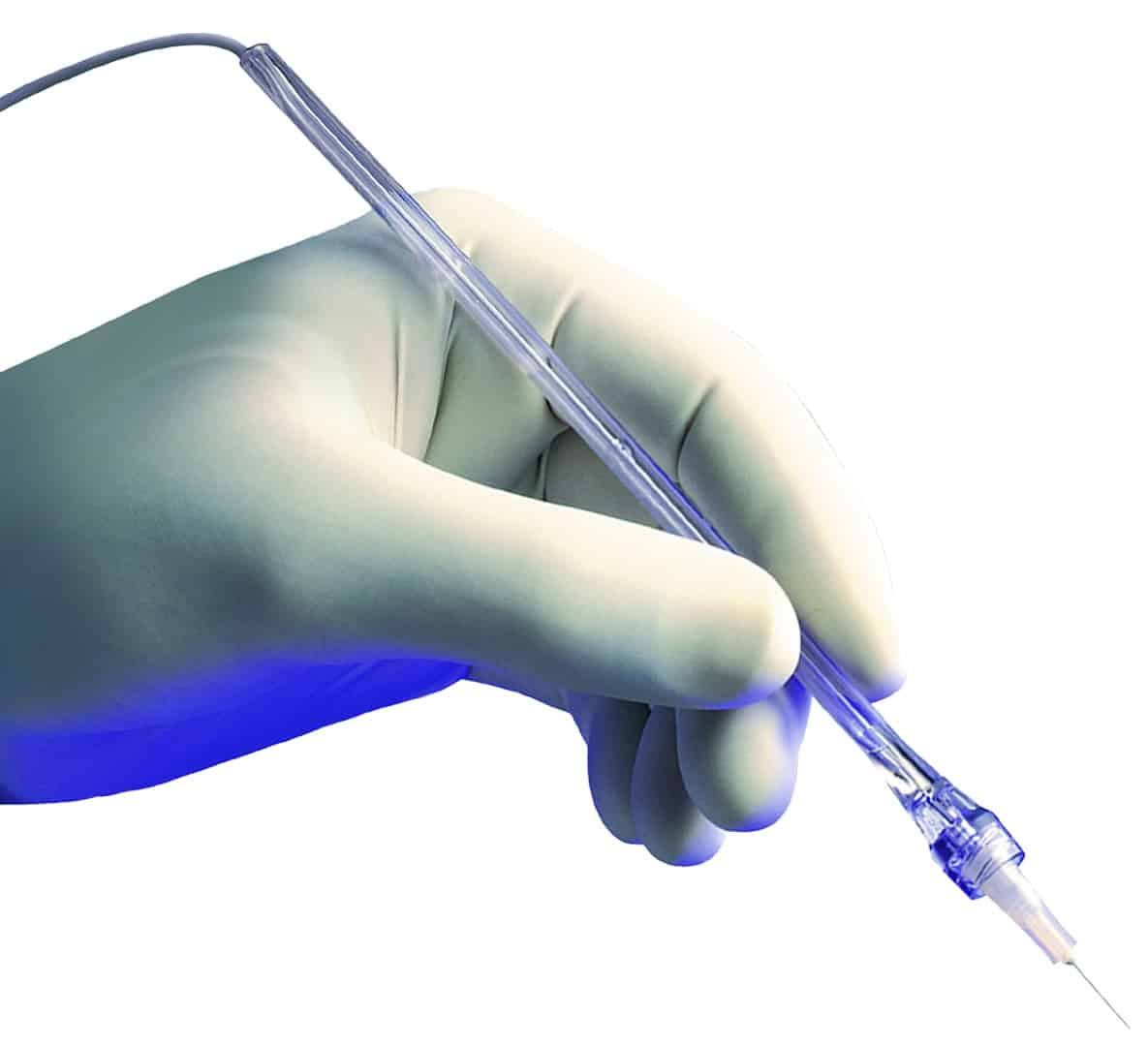
The STA handpiece and controlled delivery
We hold The Wand handpiece much like a pen. Unlike a manually operated syringe, the device controls the flow of liquid. Dynamic pressure sensing detects resistance in the system; an algorithm uses this to calculate the pressure at the needle tip. This feedback helps us position the handpiece and deliver the anaesthetic in a controlled manner. [1]
Slow, controlled delivery aims to make the injection as comfortable as possible. The needle insertion and injection may still be uncomfortable; personal anxiety also plays a role. Pressure is therefore not the only possible cause of pain. [1] [2]
For your treatment, the appropriate technique, careful application and your feedback matter. Voice guidance supports controlled and targeted application. The STA system’s integrated computer-controlled biofeedback allows delivery of the local anaesthetic to be adjusted dynamically and the anaesthesia to be administered precisely. [1]
We can shorten the slender The Wand handpiece at the designated points. This allows it to be held more discreetly and makes it look less like a conventional syringe.
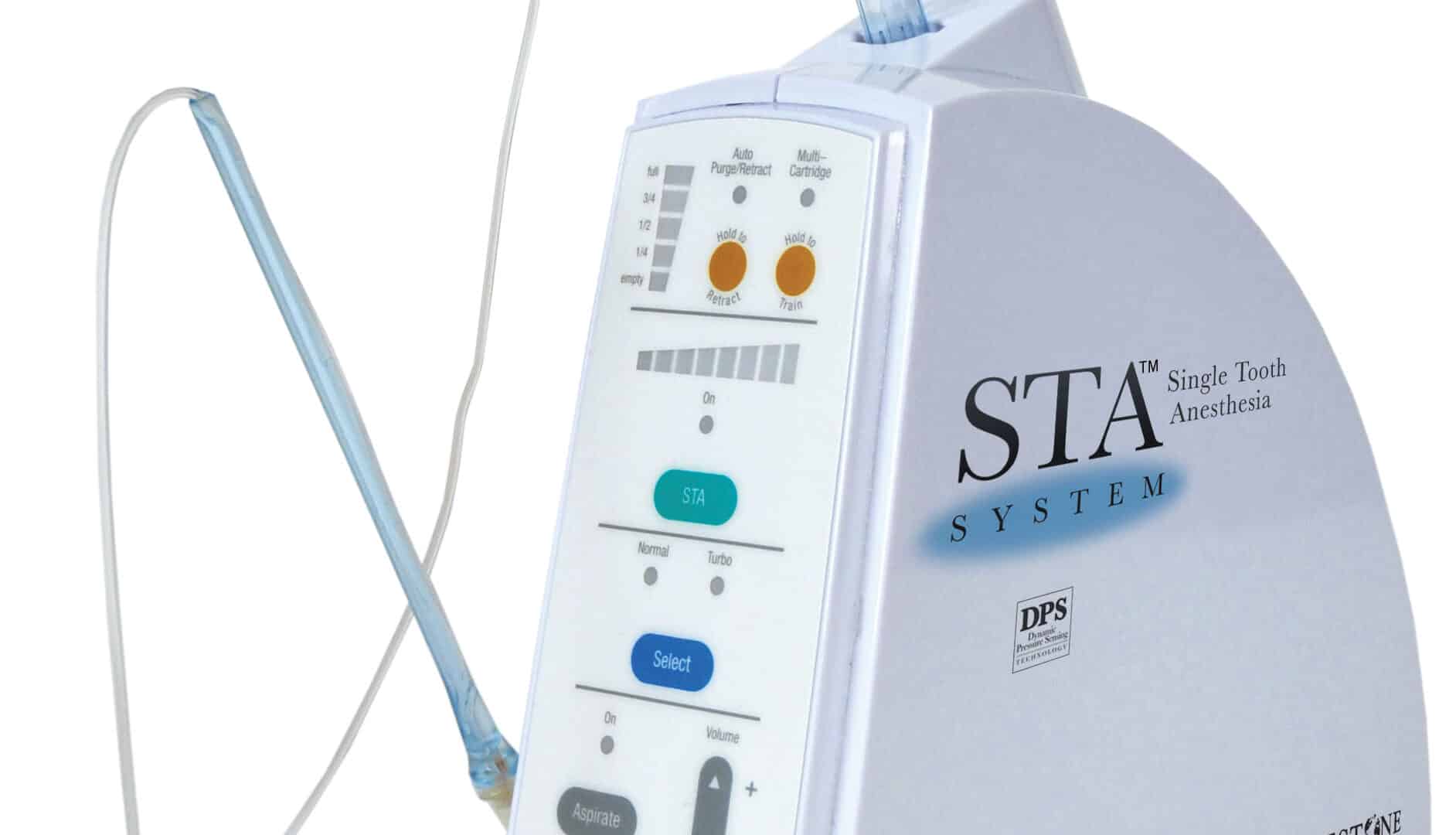
The STA system for different anaesthetic techniques
One option is intraligamentary anaesthesia: the anaesthetic is delivered specifically around the supporting tissues of an individual tooth. This can numb the tooth being treated without necessarily affecting larger areas of the lip, tongue or cheek. At smileDentity, we use STA for standard local and nerve-block anaesthetic techniques, particularly intraligamentary single-tooth anaesthesia in the lower jaw. Not every application is limited to one tooth. [1]
With a suitable single-tooth technique, a smaller amount may be sufficient. However, the active ingredient, concentration, body weight, health and total amount are decisive. We determine the required dose clinically for your treatment. Even smaller amounts must be medically appropriate; possible risks still need consideration. [1] [4]
The onset and duration depend on the anaesthetic and technique. We check the anaesthesia before starting the procedure; if necessary, we supplement it or choose another technique. How quickly and adequately it works varies between individuals. The system was developed by the US manufacturer Milestone Scientific. [1]
Your treatment appointment
What happens during anaesthesia?
1. Plan together. Tell us about previous problems with anaesthesia, medical conditions, allergies and medication. We discuss the treatment goal, suitable technique and your questions.
2. Deliver targeted anaesthesia. We position the handpiece and deliver the anaesthetic in a controlled manner. Keep communicating with us; tell us if you feel an unpleasant sensation.
3. Check the effect. Before treatment, we check whether the anaesthesia is sufficient. You can give us feedback throughout. Additional anaesthesia or a change in approach may be necessary. [1]
4. Take home your instructions. After the procedure, we explain what you should bear in mind because of the anaesthesia and treatment. The duration of numbness varies individually.
Making an informed choice
Who might benefit from STA?
Fear of injections, a limited treatment area or a wish to minimise accompanying soft-tissue numbness may be reasons to discuss STA. Whether the method is suitable also depends on the condition of the tooth and its surroundings. Inflammation, the type of procedure or health factors may require different or additional anaesthesia. [1]
We also offer computer-controlled anaesthesia to children where appropriately indicated. A small study involving 50 cooperative children aged five to seven found less pain and less lip biting with intraligamentary STA than with the mandibular nerve block studied. This does not support a recommendation for every child; bite injuries remain possible. We discuss individually with you which technique is suitable for your child. [3] [4]
Alternatives include conventional infiltration or nerve-block anaesthesia in particular. If anxiety is severe, a separately agreed approach may help. Nitrous oxide sedation serves a different purpose and does not automatically replace local anaesthesia for painful procedures.
Safety and aftercare
What should you bear in mind?
Even with a computer-controlled injection, we use a medicine for local anaesthesia. Beforehand, we discuss possible side effects, interactions and contraindications for the proposed anaesthetic. We take your personal situation into account, regardless of the device used.
For children, the AAPD lists possible complications including overdose, allergic reactions, altered sensation and injury to numb soft tissue. Parents should ensure that their child does not bite their lip, cheek or tongue. Less accompanying numbness does not replace this precaution. [4]
Before you leave our practice, we discuss how long numbness is likely to last and the guidance on eating, drinking and travelling home after your procedure. Please follow your individual aftercare instructions and contact us if symptoms persist or seem unusual.
At smileDentity
How do we work at smileDentity?
Andreas Haas, M.Sc., discusses the planned treatment and suitable anaesthesia with you. We ensure careful application, check the effect and incorporate your feedback. How you experience the needle insertion is individual; it is not completely imperceptible in every case. Our treatment options show the contexts in which local anaesthesia may be needed.
At an introductory appointment without obligation, you can see the practice, discuss your wishes and questions, and talk about your fear of injections. When booking your appointment tell us that you are interested in STA. For our dental treatments, computer-assisted STA anaesthesia is included in the cost of the respective treatment.
Frequently asked questions about STA anaesthesia (FAQ)
No. The Wand handpiece uses a fine injection needle. The difference is the computer-controlled delivery of anaesthetic and pressure feedback, not the absence of a needle puncture. [1]
No. Controlled delivery aims to make the injection as comfortable as possible; the sensation remains individual. Tell us if you feel discomfort.
With suitable intraligamentary single-tooth anaesthesia, surrounding soft-tissue numbness may be reduced. This depends on the technique, individual dose and treatment; soft-tissue numbness cannot be ruled out. If another type of injection is required, other areas of the mouth may become numb. [1]
This depends on the anaesthetic, type of injection and individual situation. We check its effect before treatment and supplement the anaesthesia if necessary. A fixed duration or immediate effect cannot be promised for every treatment. [1]
We assess whether the method is suitable for each child. The paediatric study cited examined only a small, selected age group and a particular technique. We take account of medical conditions, body weight, cooperation and the planned procedure. The decision therefore does not depend on the device alone. [3] [4]
We give you advice suited to your procedure and any remaining numbness. With children, particular care is needed to prevent them from biting numb lips, cheeks or their tongue. Please supervise your child accordingly. [4]
Tell us immediately. We assess the situation and can supplement the anaesthesia or change the technique. STA replaces neither checking its effect nor individual treatment planning. [1]
For our dental treatments, computer-assisted STA anaesthesia is part of our practice concept and is included in the cost of the respective treatment.
Sources on STA anaesthesia
Our information is based on manufacturer information about device operation, clinical comparisons and recommendations for treating children. These sources help us put different questions into context. They do not demonstrate that STA is generally superior for every treatment.
- [1] Milestone Scientific: STA Single Tooth Anesthesia System – Instruction Manual. Rev. K, Februar 2020 (Herstellerangaben zur Gerätefunktion).
- [2] Al-Obaida et al., 2019: Vergleich computergesteuerter intraligamentärer und herkömmlicher Infiltrationsanästhesie. Randomisierte Studie mit 80 Erwachsenen.
- [3] Helmy et al., 2022: Intraligamentäre STA-Anästhesie versus Unterkiefer-Leitungsblock. Randomisierte Studie mit 50 kooperativen Kindern von fünf bis sieben Jahren.
- [4] AAPD: Use of Local Anesthesia for Pediatric Dental Patients. Revision 2023; Reference Manual 2025 (pädiatrischer Geltungsbereich).
Sources and links last editorially checked on: 18 October 2026.
Let’s discuss your anaesthesia personally.
Arrange an introductory appointment without obligation. We show you the practice, discuss your wishes and answer your questions about local anaesthesia.
Medical review of the German source: On 28 October 2026, this content was reviewed by Andreas Haas, M.Sc. (dentist at smileDentity Dreieich) for medical accuracy, currency and scientific basis.