

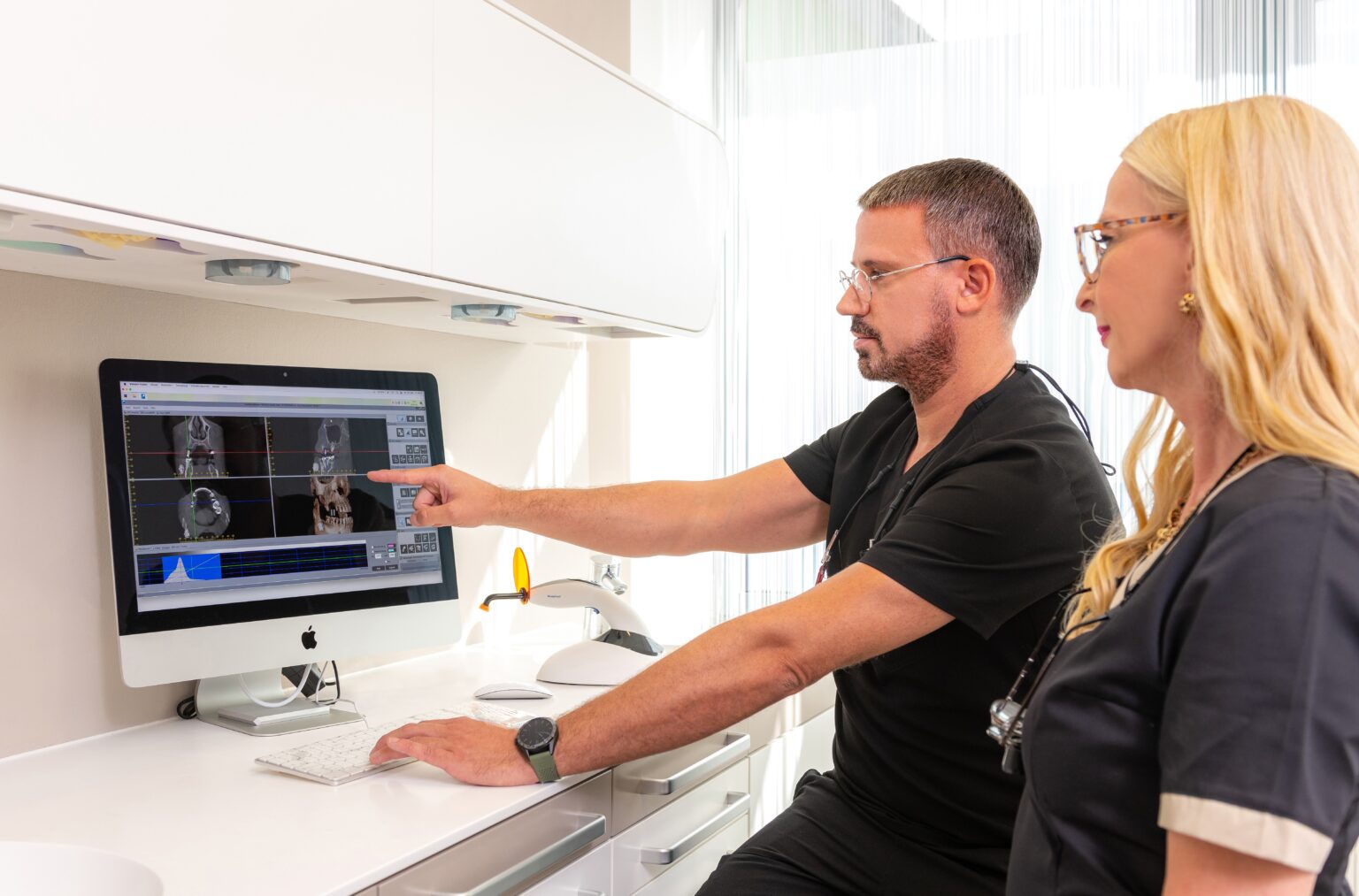
Synoptic treatment concept
Bringing findings together and planning treatment step by step.
With our synoptic treatment concept at smileDentity in Dreieich, we consider the necessary treatment steps in context. Preparatory treatment, function and the desired aesthetics should work together – for example when planning all-ceramic reconstructions. Your plan is based on your findings, your wishes and the medical possibilities. It is not a promise of a particular outcome.
‘Synoptic’ comes from the Greek ‘sýnopsis’: an overview or a view of the whole. This describes our approach: the lead dentist responsible assesses your findings, coordinates preparatory treatment and reassesses the conditions before the definitive restoration.
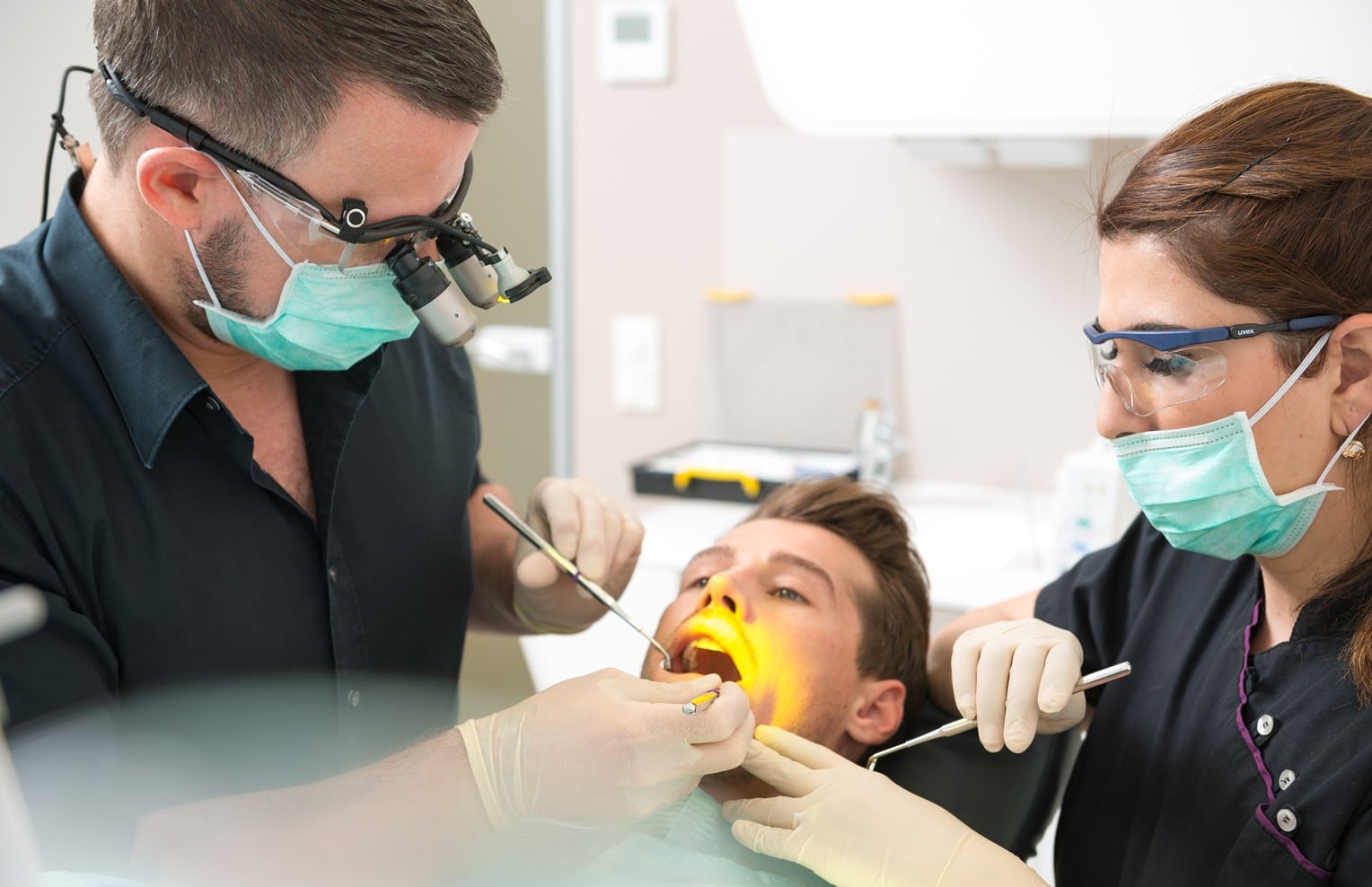
Planning together, coordinating treatment
In a more extensive reconstruction, an individual tooth is only part of the task. At smileDentity, our synoptic planning takes account of your medical history, dental findings, function and aesthetic analysis. Your personal treatment goal matters. We decide individually which examinations are needed. Not every technical procedure is necessary for every patient.
Analysis and interpretation of the individual case lead to the clinical conclusion – the ‘conclusio’. We combine experience with relevant scientific evidence. This helps us put individual findings into a reasoned sequence: what needs treating first, what can be done together and which questions remain open for now?
For tooth replacement within German statutory dental care, the G-BA dental prostheses directive also requires an overall assessment and treatment plan. It specifies necessary preparatory treatments before definitive restoration. These requirements support individual steps in our planning; we do not infer any particular superiority of our concept from them. [1]

Coordinating preparatory treatment and definitive restoration
Our lead dentist monitors and coordinates preparatory treatment and reassesses its progress. This reassessment is a separate decision point. We begin the restorative phase only when the necessary conditions are met. Function and aesthetics remain our shared goals: your restoration should suit your oral situation and the agreed requirements.
One specific example is severe periodontitis at stage IV. The current S3 guideline describes interdisciplinary treatment, reassessment and planning of definitive rehabilitation after evaluating the initial periodontal condition and treatment outcomes. These recommendations apply to this condition; they are not a treatment schedule for every patient. [2]
Different disciplines work together depending on the findings. For example, if we need to consider treatment inside a tooth before providing a restoration, the question of endodontic treatment becomes part of your overall plan. For us, ‘under one roof’ means clear coordination. We discuss who will carry out each step and whether further coordination is needed for your particular case. [1]
In our practice, dental hygienists carry out hygiene phases 1 and 2, delegable measures of anti-infective therapy (AIT), assistance with reassessment and measures during the maintenance phase.
Our lead dentists perform preparatory conservative, surgical, endodontic and functional treatments. Preparatory endodontic care includes root canal treatment and retreatment where required. Dental assessment and treatment decisions remain the responsibility of our lead dentists.
Periodontal therapy follows this sequence:
- hygiene phase 1
- hygiene phase 2
- anti-infective therapy (AIT)
- reassessment phase
- corrective phase according to the findings
- restorative phase if required
- maintenance phase with supportive periodontal therapy (SPT).
We also plan and provide your definitive prosthetic restoration at smileDentity, working closely with partner dental laboratories and experienced master dental technicians. Implant treatment is also part of our services.
We coordinate major surgical procedures, extensive bone surgery and orthodontic treatment with experienced external practitioners and arrange referrals accordingly. Integration into the overall plan and overarching coordination remain the lead dentist’s responsibility.
Step by step
How is your treatment plan developed?
1. Clarify findings and concerns. We discuss what is affecting you and what you would like to achieve. Existing findings and previous treatments help us assess your situation. Your health information and medication are part of the personal consultation.
2. Agree on goals and sequence. We consider the findings together with you. We explain planned procedures, possible alternatives and open questions clearly. You should be able to understand why we recommend a step and which decisions cannot yet be made.
3. Carry out preparatory treatment and reassess. Necessary preparatory measures precede definitive restoration. The lead dentist reviews progress and conditions; the plan is adjusted if new findings arise. Before moving on, we reassess healing, patient cooperation and the agreed aesthetic wishes. Before definitive restoration, the biological and functional conditions must be assessed positively and the necessary healing and preparatory treatment periods must have elapsed. [1] [2]
4. Provide the restoration and plan maintenance. Long-term temporary restorations can first bridge healing phases and treatment stages involving tooth loss, bone augmentation or implants, and allow the planned restoration to be tried out. In the restorative phase, we implement your agreed plan. Afterwards, we discuss reviews and personal guidance on care or ongoing support. Requirements depend on the findings and restoration.
Making an informed choice
What can coordinated planning achieve?
Our concept makes connections clear and coordinates treatments clinically. Care and professional skill in each individual area are important. We select modern or innovative procedures according to their suitability; new does not automatically mean better. Our recommendations take account of your findings, expected benefits, risks and possible alternatives.
Even in complex cases, our treatment goal is an outcome that is satisfactory both functionally and aesthetically. We assess individually how far this is achievable and how it can be maintained over time. The concept cannot guarantee a particular lifespan, an ideal appearance or a complication-free course.
After restoration
Why is maintenance part of the overall plan?
Our planning does not end when your reconstruction is complete. We discuss care, appropriate reviews and changes that should prompt you to contact us. Fixed general intervals do not suit every initial situation.
For people with stage IV periodontitis, the S3 guideline describes individually tailored supportive care, including in connection with restorative treatment. These condition-specific recommendations are not applied indiscriminately to all treatments. [2]
At smileDentity
How do we work at smileDentity?
At smileDentity, Andreas Haas, M.Sc., as lead dentist, is responsible for overall planning, coordination and interim assessments. He discusses your findings and the intended outcome with you. The synoptic treatment concept connects individual decisions into a clear plan. Function and aesthetics should both be considered. The services that may be suitable for you are outlined in our Treatments.
Arrange a no-obligation introductory visit: we show you the practice, discuss your wishes and answer your questions. When requesting an appointment, you can indicate that you would like to discuss a more comprehensive treatment plan. We clarify specific responsibilities, the process and costs based on your situation.
Frequently asked questions about the synoptic treatment concept (FAQ)
Coordination becomes particularly important when several findings or treatment steps come together. The extent of planning depends on your situation. The term alone does not mean that you automatically need numerous treatments.
No. As lead dentist, Andreas Haas, M.Sc., is responsible for overall planning, coordination and interim assessments. Our dental hygienists carry out the hygiene phases. For major surgical or orthodontic procedures, we involve external practitioners; overarching coordination remains with smileDentity.
No. First, we discuss with you which treatment is necessary and appropriate at all. Our concept organises decisions and steps. We determine a particular reconstruction only from your findings and agreed goals; the name does not replace this assessment.
Findings and treatment outcomes can affect the subsequent plan. Reassessment helps us decide whether the conditions for definitive restoration are met or whether something needs adjusting first. For stage IV periodontitis, this assessment is explicitly part of the guideline recommendations. [2]
We cannot give a reliable timeframe without examining your situation. The extent of preparatory treatment, necessary reviews and the planned restoration affect the sequence and duration. We discuss with you which steps can already be planned and what later appointments depend on.
No. What matters is whether a procedure suits your situation and whether the expected benefit justifies the possible drawbacks. Established and newer options are assessed individually. Using technology alone does not guarantee success.
Costs depend on the proposed services. We explain the procedures, alternatives and expected costs in advance. The G-BA directive linked here concerns tooth replacement under statutory dental care; it does not imply blanket cost coverage for every individual treatment. [1]
Care, reviews and ongoing support are part of the discussion. The appropriate measures and intervals depend on your initial findings and restoration. There are specific recommendations for supportive care in stage IV periodontitis; these do not automatically apply to every case. [2]
Sources on treatment planning
The sources support selected steps within their respective scopes. They do not establish any general superiority of the practice’s synoptic concept.
- [1] G-BA: Zahnersatz-Richtlinie. Aktuell offiziell bereitgestellte Fassung; geändert 18.02.2016, in Kraft 04.05.2016. Abschnitt C, insbesondere Nr. 8–11 (vertragszahnärztlicher Zahnersatz).
- [2] DG PARO/DGKFO/DGI/DGPro/DGZMK: Die Behandlung von Parodontitis Stadium IV. S3-Langfassung 1.0, AWMF 083-056, Stand 31.05.2026; gültig bis 30.05.2031. Krankheitsbezogene Empfehlungen zu Beurteilung, Rehabilitation und Erhaltung.
Sources and links last editorially checked on: 18 October 2026.
Let’s discuss your treatment plan personally.
Get to know our practice. We discuss your wishes and establish which information is needed for an individual treatment plan.
Medical review of the German source: On 28 October 2026, this content was reviewed by Andreas Haas, M.Sc. (dentist at smileDentity Dreieich) for medical accuracy, currency and scientific basis.