


Dentist for anxious patients in Dreieich
Gentle treatment with as little discomfort as possible at smileDentity.
People who have had bad experiences at the dentist sometimes avoid necessary treatment for many years. At smileDentity in Dreieich, we approach your dental anxiety with patience, understanding and a clearly agreed plan. Your safety and trust come first. No treatment step takes place without your consent. You set the pace and can take a break at any time.
Topical anaesthesia, computer-controlled local anaesthesia with STA® and Nitrous oxide sedation can support treatment. We decide together which method is suitable for you after a personal discussion and assessment of your individual situation.
Your visit to smileDentity
A manageable first step
Getting to know each other first
If you wish, we start with a discussion — without examination or treatment.
Planning together
We discuss your experiences, suitable methods and likely costs before treatment begins.
Agreeing on breaks
An agreed signal and your feedback help us coordinate each step with you.

Our methods for dental treatment with as little discomfort as possible
Dental treatment with as little discomfort as possible relies on careful planning and individually tailored methods. Our options have different roles: preparing the surface, numbing the tooth locally or reducing anxiety and tension. Depending on the treatment, methods can be combined.
The following overview explains their effects and possible uses. No method is equally suitable for every person and every procedure.
Effects and uses
Which support is right for you?
Preparing for an injection
Topical anaesthesia
Before an injection, a gel can temporarily reduce sensitivity in the oral mucosa. This preliminary surface anaesthesia can make the needle insertion more comfortable; it does not replace necessary anaesthesia of the tooth. [1]
Local pain control
STA®: targeted local anaesthesia
With Single Tooth Anesthesia (STA®) the anaesthetic is delivered by computer under controlled pressure. This can allow a more even and comfortable injection. Depending on the technique and treatment area, the effect can be limited to one tooth and the surrounding tissue, resulting in less extensive numbness of the lip or cheek. [1] [2]
This may be useful, for example, for needle anxiety, fillings, crowns or other local treatments. Individual suitability is decisive.
Calming support
Nitrous oxide: reducing tension
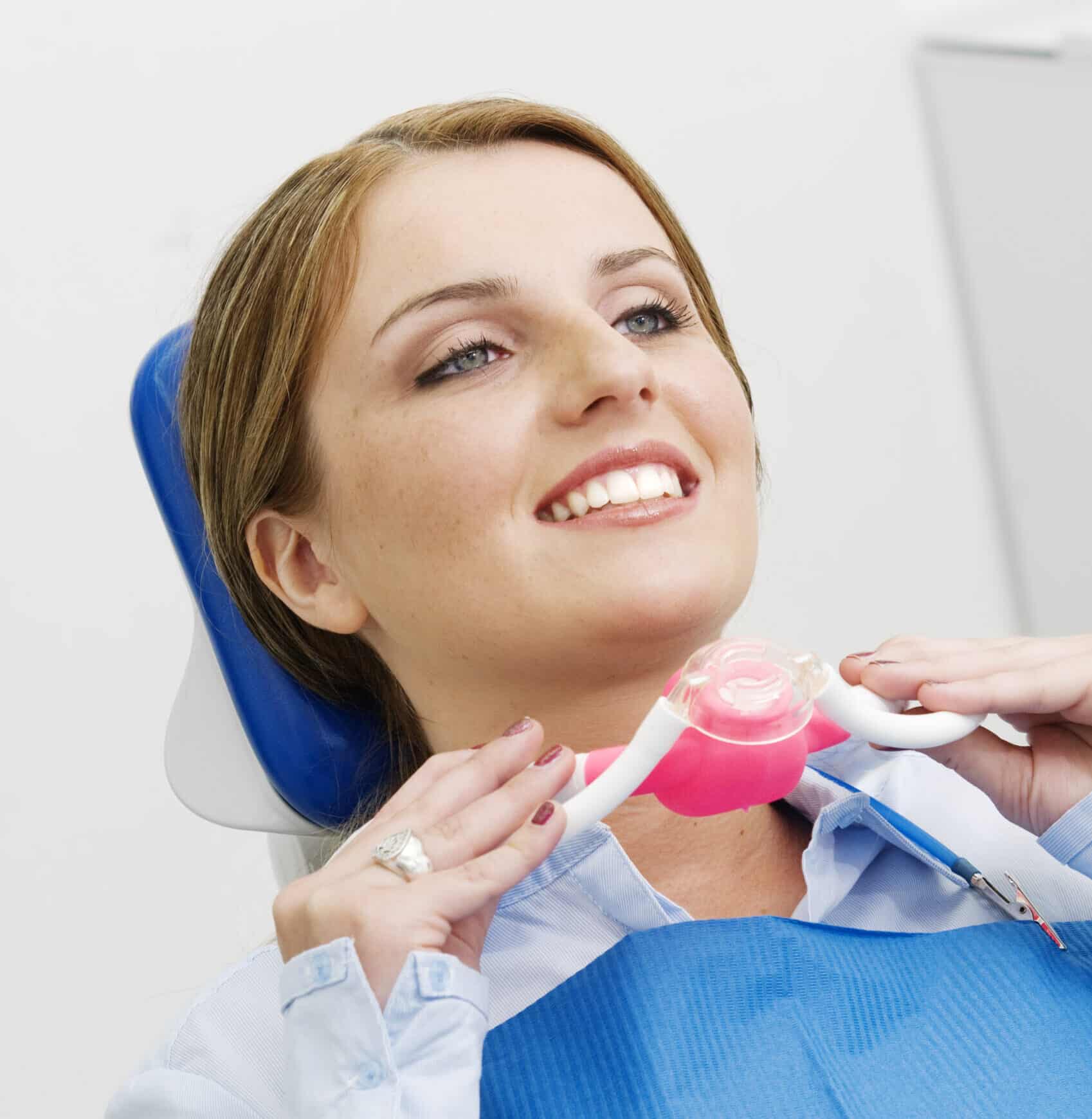
Through a nasal mask, you breathe an individually adjusted mixture of nitrous oxide and oxygen. The aim is relaxation while maintaining consciousness and protective reflexes: you remain responsive. Nitrous oxide can also reduce pain perception, but does not reliably replace local anaesthesia. [3]
Dental anxiety, a pronounced gag reflex or longer treatments can be reasons to discuss nitrous oxide. We assess suitability, unobstructed nasal breathing and cooperation beforehand.

Three steps towards planned treatment
The first visit is the biggest hurdle for many anxious patients. You therefore start by getting to know our practice and treatment team at your own pace. We explain possible treatment steps and agree together how to proceed.
Your treatment process
From discussion to treatment, together
01
Getting to know us without treatment
At the first appointment, we take time to discuss your previous experiences, fears, wishes and questions. If you wish, it remains solely a personal discussion. Please let us know this preference when booking.
02
Examination and planning
Once you are ready, we examine you carefully. As an additional method, we can use caries detection with fluorescence light without X-rays. This does not replace medically necessary X-rays, which we discuss beforehand. [4]
We then prepare a manageable treatment plan, agree on anaesthesia or sedation and explain the likely costs.
03
Treatment at your pace
Treatment only starts with your consent. We explain the steps and use agreed signals for breaks. Topical anaesthesia, STA® and — where suitable and desired — nitrous oxide can support treatment. Tell us about pain or discomfort so that we can adapt our approach.
After treatment
Recovery and getting home are part of the plan
The effects of nitrous oxide usually wear off quickly. As described on our nitrous oxide sedation page we usually give you oxygen for five to ten minutes afterwards, or longer if necessary. Andreas Haas, M.Sc., then recommends approximately 15 to 30 minutes of observation.
We assess individually whether you can leave the practice and drive yourself, taking account of how you feel, the procedure and any other medicines. A fixed waiting period is not permission to drive. Adults often do not need an escort after nitrous oxide–oxygen sedation alone; children are accompanied. [3]
Please follow your personal aftercare advice, including guidance on eating and drinking while local anaesthesia is still effective.
At smileDentity
How do we work at smileDentity?

Andreas Haas, M.Sc., discusses with you which support suits the planned treatment. Whether you need professional dental cleaning, a filling or Root canal treatment : your feedback and a clearly explained plan remain important. Our available services are presented in our Treatments.
We do not routinely provide other sedation or general anaesthesia methods. If nitrous oxide is unsuitable, we discuss a different approach.
Our practice in Dreieich also cares for anxious patients from Sprendlingen, Buchschlag, Götzenhain, Neu-Isenburg, Langen and southern Frankfurt. You can arrange an initial personal discussion by telephone or online.
Relaxed treatment: nitrous oxide sedation and gentle care at the smileDentity dental practice in Dreieich
Frequently asked questions about treating anxious patients in Dreieich (FAQ)
Complete freedom from pain cannot be guaranteed; perception varies individually. Our aim is treatment that is as comfortable as possible through careful planning and effective anaesthesia. Acute inflammation can reduce its effect. We then adapt the approach and discuss alternatives. [1]
Delivery speed and pressure are controlled by computer. This can make the injection more even and comfortable. Depending on the technique, the anaesthetic can act more selectively, with less extensive numbness of the lip or cheek. The suitable method depends on the procedure and dental findings. [1] [2]
With the intended level of minimal sedation, you remain awake and responsive. It is not general anaesthesia. Your medical history and planned treatment determine whether it is suitable. Your feedback during treatment remains important. [3]
For our dental treatments, computer-assisted STA anaesthesia is included in the cost of the respective treatment. Nitrous oxide sedation is a private service. Reimbursement by private health or supplementary dental insurance depends on the policy. We inform you in advance about the likely costs. If necessary, clarify possible reimbursement with your insurer.
Yes. If you wish, the first appointment is solely for getting to know us and talking, without examination or treatment. When booking, tell us that you would first like to discuss your dental anxiety and wishes.
Tell us about your medicines and medical conditions. Do not take sedatives on your own initiative beforehand. We recommend avoiding a large meal for about two to three hours before the appointment; we discuss individual advice on eating, drinking and medicines with you. Let us know beforehand if you have a cold or difficulty breathing through your nose.
Nitrous oxide sedation for up to 30 minutes costs €124, including the nasal mask (€24). At a further appointment, if you reuse your previously purchased nasal mask, nitrous oxide sedation for up to 30 minutes costs €100. Each additional 30-minute period, including any part of a period, costs €100. Aftercare time and oxygen administration are included in these prices. Dental treatment is charged separately.
Sources for clinical context
- [1] AAPD: Use of Local Anesthesia for Pediatric Dental Patients. Revision 2023, Reference Manual 2025; Grundlagen der örtlichen Betäubung.
- [2] Ramanathan et al.: Single Tooth Anesthesia – klinische Vergleichsstudie, 2024 (online 2023).
- [3] SDCEP: Conscious Sedation in Dentistry. 2017, überprüft und unverändert 2022; erneute Überprüfung angekündigt.
- [4] Kühnisch et al., ORCA/EFCD: Konsens zur Kariesdiagnostik, Teil I, 2024.
Sources and links last editorially reviewed on: 15 October 2026.
The first step can be a gentle one.
Get to know us at your own pace. We discuss your fears and explain the options available to help you feel relaxed during treatment.
Medical review of the German source: Clinical approval confirmed on 31 October 2026 by Andreas Haas, M.Sc. (dentist at smileDentity Dreieich).
The answer about the costs of STA anaesthesia and nitrous oxide sedation in the German source was clinically reviewed and approved by Andreas Haas, M.Sc., on 31 October 2026.