

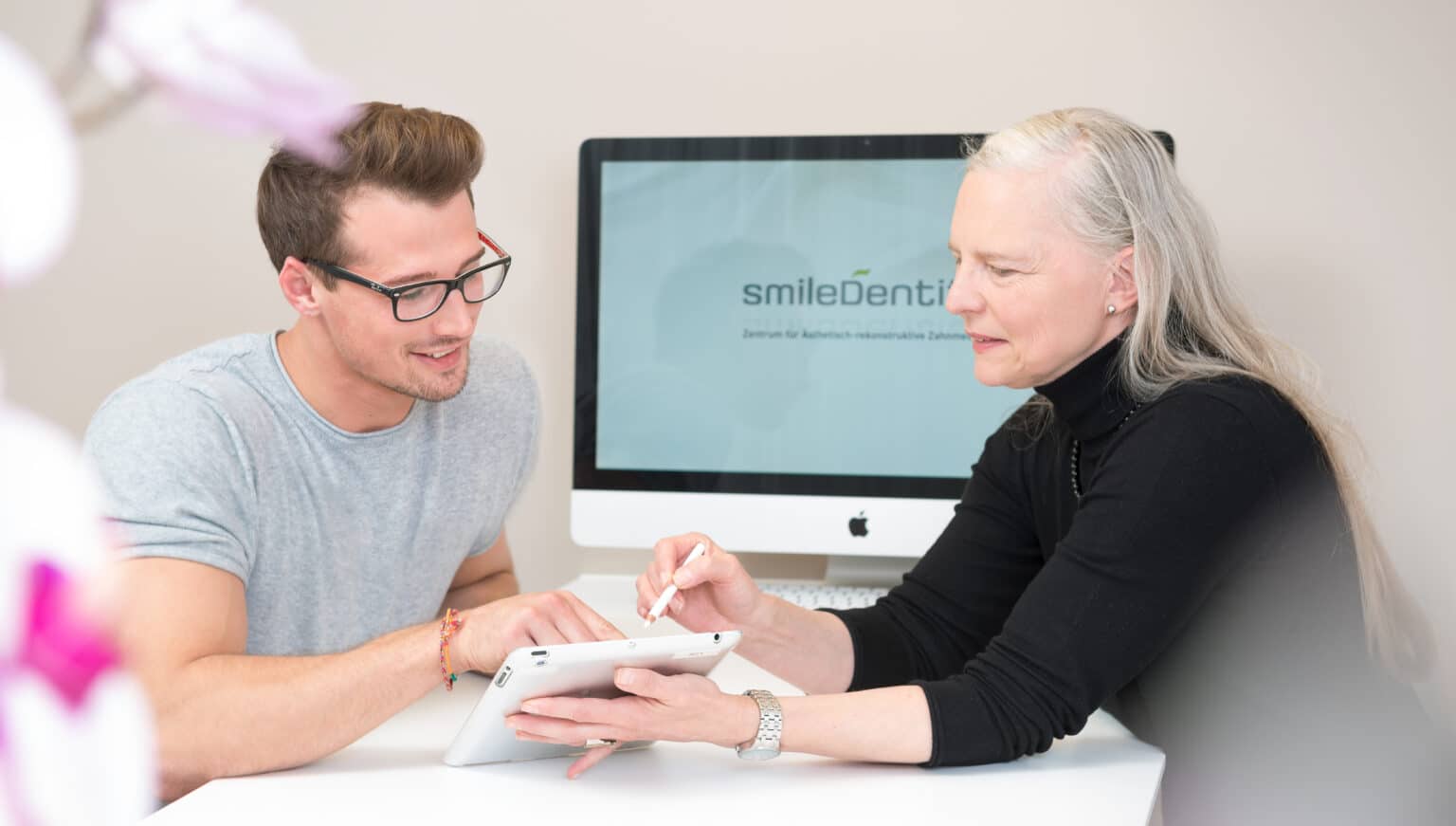
iPad at the practice
Viewing findings together and answering questions personally.
At smileDentity in Dreieich, we use an iPad to discuss your findings clearly and record your information digitally. We can view existing images together and use markings to explain particular areas. The portable tablet supports our conversation; it is not a treatment in itself.
Particularly when explaining digital X-ray images it is important to connect the image and the findings clearly. A high screen resolution alone does not mean that an image contains more diagnostic information. Your clinician explains what a finding means for you.
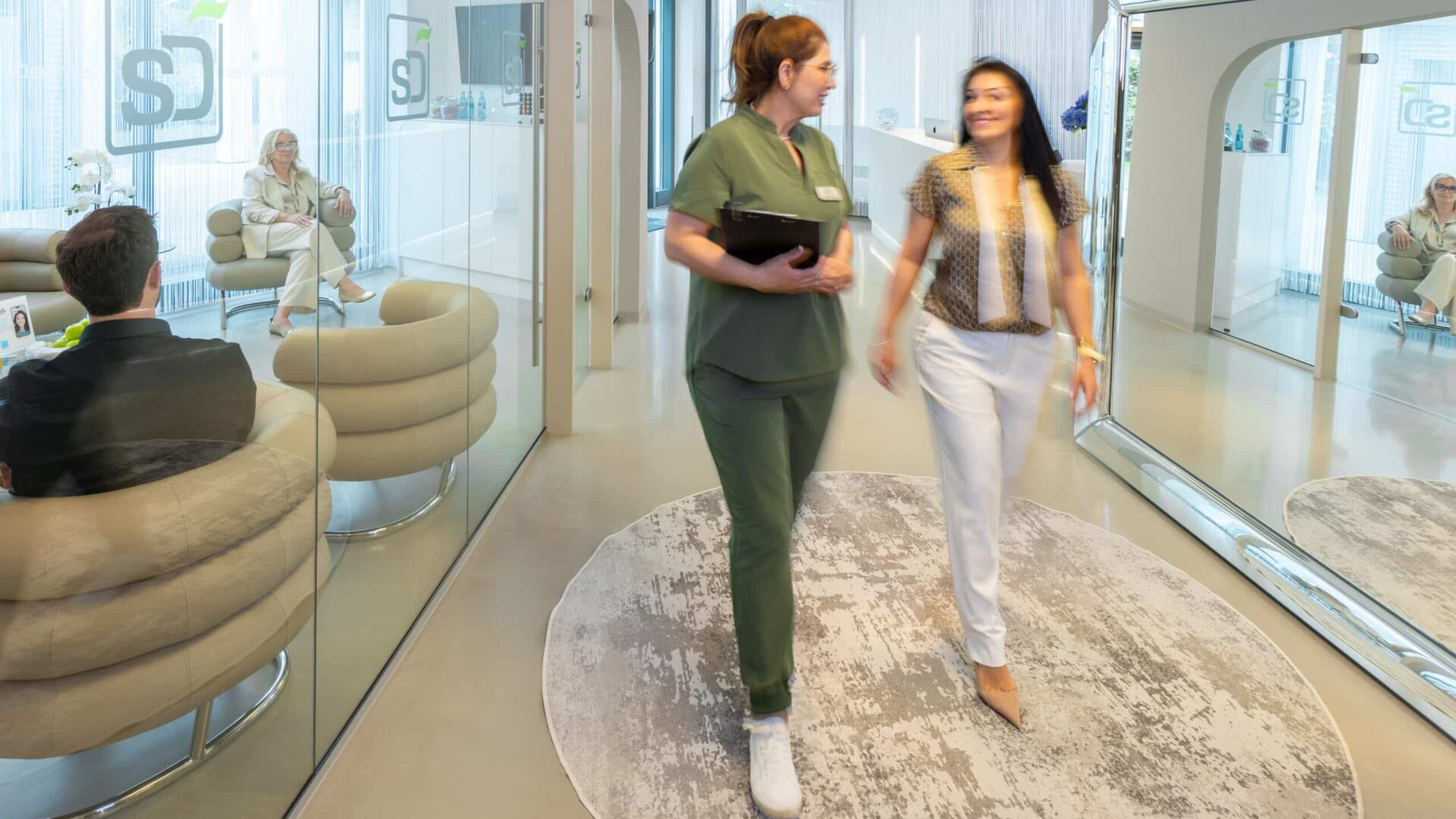
Registration and finding your way around our practice
Before treatment, you complete your medical history on the iPad and sign digitally. The information is transferred to our solutio charly practice software. Our reception staff help with any difficulties entering information and finally check completeness on the iPad. Alternatively, you can complete the form on paper. You can obtain a copy of your completed medical history form.
Your information provides a basis for the personal discussion. Tell us if anything is unclear, an answer needs correcting or your health situation has changed. Digital entry is not an assurance that all information has automatically been transferred completely and without error.
Protecting personal data is important. Entering your information must not give access to other patients’ records. Protecting the specific application and its access is part of the practice’s organisational and technical responsibilities; using an iPad alone does not establish a comprehensive security guarantee.
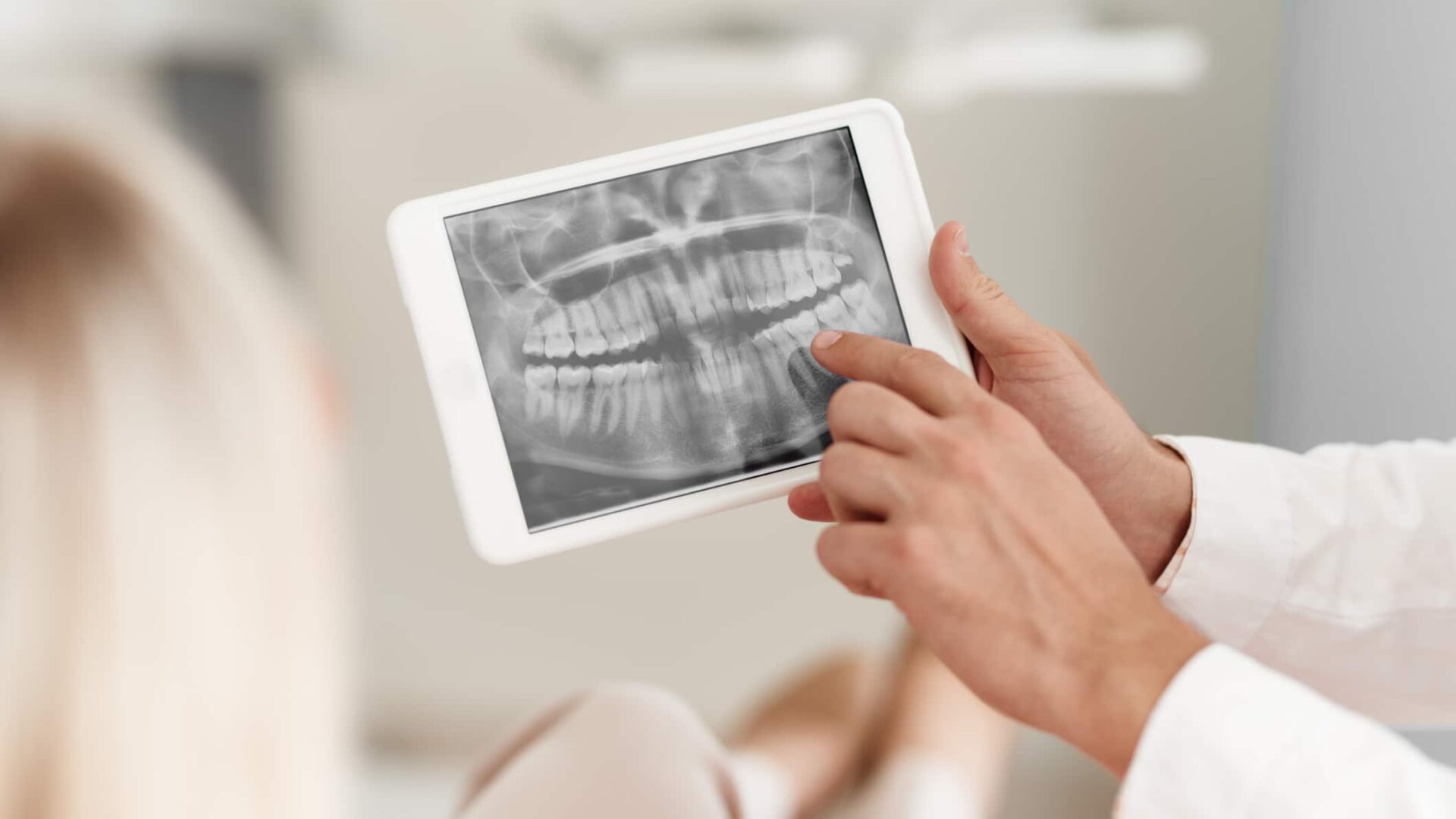
Discussing X-ray findings together
We usually explain X-rays on the consultation computer in the treatment room. For a clear discussion, we can use larger wall-mounted screens in the treatment or consultation room. The iPad also allows us to view images together.
Digital X-rays can be displayed on the tablet through the application used. This allows you to view your own images together with your clinician. Coloured markings or annotations can highlight particular areas during the discussion. Ask what a marked area shows and why it matters for the proposed treatment.
The iPad changes how information is displayed. It replaces neither the dental examination nor professional assessment of the existing image. A larger or apparently sharper display alone does not establish a diagnostic advantage. Interpreting the information available for your case remains decisive.
Professional articles and short videos can also illustrate a treatment clearly. Such media complement a personal, understandable informed-consent discussion. They do not automatically answer your individual questions about the process, risks or alternatives and do not replace the necessary conversation. [1]
The iPad is also used for explanation, consent and documenting treatment planning. An Apple Pencil allows annotations to be added. For fläsh whitening, an AI-assisted preview can illustrate how lighter teeth might look in your face and smile. It shows a possible result and is not a promise of an outcome. We document tooth colour before and after treatment.
Before your appointment
How can you prepare?
You can go through the health questions at your own pace before your visit. The existing registration and medical history form is available under Downloads & links. Patient information on selected topics is also available there. Discuss with us which information is relevant to your planned treatment.
Note down your questions and any changes that may be important to our discussion. If you do not understand a question or are unsure of an answer, ask us rather than guessing. We help you enter information and clarify with you how it is recorded and, where necessary, corrected.
Taking your findings with you
How can you obtain documents about your treatment?
You can request access to your treatment record and electronic copies. The current wording of the law provides for the first copy to be free of charge. Statutory restrictions, for example to protect other people’s rights, must be taken into account. [2]
Please ask us if you would like copies of your X-rays or findings. We clarify with you which documents will be provided, in what format and by which appropriate method. This is not a promise of immediate delivery by ordinary email.
Appropriate protective measures must be taken when transmitting personal data. The German Data Protection Conference describes a risk-based choice of transmission method. This general requirement does not confirm any specific encryption or technical configuration at our practice. [3]
At smileDentity
How do we work at smileDentity?
Andreas Haas, M.Sc., and our team use the image discussion and your information as a starting point for personal follow-up questions. The tablet supports communication. We determine which examination or treatment is appropriate from your situation; an app does not make that decision.
Exploring our Treatments can help you find your bearings. To get to know us personally, you can Book an appointment. We show you the practice, discuss your wishes and answer your questions. For organisational enquiries, you can reach us through the contact page.
Frequently asked questions about the iPad at the practice (FAQ)
No. Our reception staff help you enter information and clarify questions. Alternatively, you can complete the medical history form on paper. It is also available in Downloads & links to help you prepare before your appointment.
Displaying an image on a different screen does not automatically create additional information. The tablet can make a shared explanation easier. Assessing the X-ray findings remains a professional task for the clinician.
No. Images, articles and videos can supplement an explanation. Your personal questions and the information important to your treatment belong in a clearly understandable informed-consent discussion. [1]
Yes. Our Downloads & links page links to the registration and medical history form. Read the questions at your own pace and note anything unclear for our team. This preparation does not replace personal clarification of your information.
Tell us about it. Together, we clarify information that is unclear, incorrect or outdated. Do not assume that an app identifies every inconsistency itself or corrects it automatically.
You can request access to your treatment record and electronic copies. Under the current wording of the law, the first copy is free of charge. Discuss which documents you need and how they will be provided; statutory restrictions must still be observed. [2]
We cannot promise immediate delivery by ordinary email. For personal health data, we need to establish an appropriate transfer method. We discuss with you which means of provision are possible. [3]
Sources on patient information
The sources explain informed consent, access to records and requirements for transmission. They do not demonstrate diagnostic superiority of a tablet or an audit of the practice’s actual IT systems.
- [1] Bürgerliches Gesetzbuch § 630e – Aufklärungspflichten – aktuelle Onlinefassung auf Gesetze im Internet, redaktionell geprüft am 18.10.2026.
- [2] Bürgerliches Gesetzbuch § 630g – Einsichtnahme in die Behandlungsakte – aktuelle Onlinefassung auf Gesetze im Internet, redaktionell geprüft am 18.10.2026.
- [3] Maßnahmen zum Schutz personenbezogener Daten bei der Übermittlung per E-Mail (Stand 16.06.2021).
Sources and links last editorially checked on: 18 October 2026.
Get to know our practice personally.
Arrange an introductory visit without obligation. We show you the practice, discuss your wishes and answer your questions.
Medical review of the German source: On 28 October 2026, this content was reviewed by Andreas Haas, M.Sc. (dentist at smileDentity Dreieich) for medical accuracy, currency and scientific basis.