

Your own blood
The starting material comes from you. We explain its preparation and use for your treatment.

Tooth extraction or another surgical treatment creates a wound that the body gradually closes. Preparations made from your own blood may form part of care in selected situations. At smileDentity in Dreieich, we offer A-PRF and I-PRF using Joseph Choukroun’s method. We discuss whether you would like an autologous blood adjunct and whether it is appropriate for your procedure based on the findings. When planning an implant restoration the treatment required overall remains the deciding factor. PRF replaces neither careful surgery nor appropriate aftercare and does not promise a particular healing time.
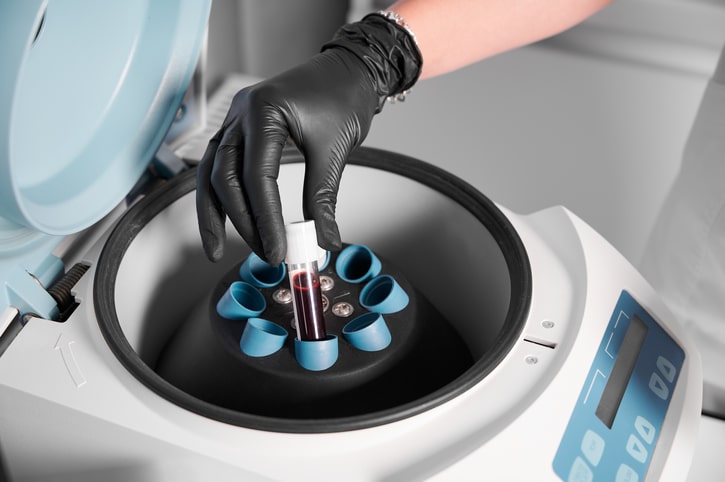
PRF stands for platelet-rich fibrin, a fibrin preparation made from your own blood. Depending on preparation, it contains platelets, leucocytes and growth factors, among other components involved in natural healing processes. Dental use aims to utilise these components from the body at the treatment site. However, this does not automatically mean an additional benefit for every wound. The German S3 guideline describes possible use for certain extraction wounds; it does not support a general recommendation for all procedures. [1]
The specific treatment goal and expected additional benefit are decisive. The label ‘biological’ alone does not justify its use.
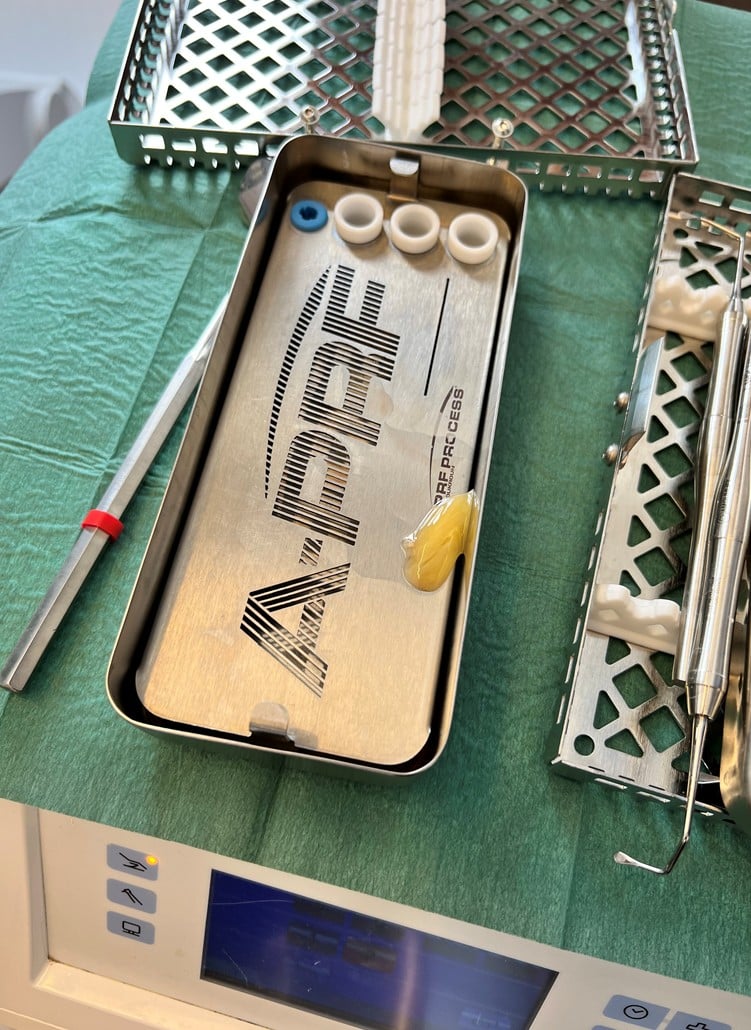
For preparation, we take a small blood sample; the exact amount depends on the planned preparation. We process the sample in a centrifuge. Different preparations result depending on the method. A-PRF describes a firmer fibrin structure; I-PRF is initially liquid and injectable. We explain the form we intend to use and how we will apply it at the surgical site during treatment planning. It is processed autologous blood, not a medicine that works identically in every patient. [1]
Production without artificial additives refers to the autologous blood preparation itself. We explain the exact preparation before use. If we also need a bone substitute or membrane, for example, we discuss its composition and origin separately. A PRF procedure does not automatically make combined treatment completely free of other materials.
The S3 guideline lists a solid PRF plug as a possible option for healing an extraction socket left to heal openly and preserving alveolar ridge volume. A conditional recommendation means use may be considered; it is not a requirement for every tooth extraction. For other situations studied, the evidence is insufficient for a general treatment recommendation. These include larger augmentation procedures, sinus floor elevation and immediate implant placement. [1]
More recent studies also show no uniform picture. A randomised study from 2025 found no significant advantage in early wound healing or pain after simple single-tooth extractions with A-PRF+. However, the ten-day observation period does not answer every question about later bone healing. [2]
Another study examined I-PRF in surgically removed lower wisdom teeth. The preparation, procedure and measured outcomes differ. Individual studies therefore cannot be generalised to every autologous blood treatment. [3]
Bring your questions and an up-to-date medication list to the consultation. It is also important to mention any problems during previous blood tests or a fear of needles. Taking blood may be briefly uncomfortable; bruising or temporary swelling at the puncture site is possible. Discuss any such concerns beforehand. [4]
We discuss whether special preparation is necessary, which steps the procedure involves and when checks should take place. Do not change prescribed medication independently. We also explain which symptoms to expect after the overall treatment and which changes should prompt you to contact us. The general surgical aftercare instructions also apply when PRF is added.
The decision to use autologous blood should serve a clear treatment goal. We explain how we would care for the wound without PRF and which alternatives are available. For a bone defect, we also clarify whether regenerative procedures are required. PRF alone does not automatically replace planned bone augmentation.
Before the procedure, we discuss any additional services with you and present the costs clearly. Whether and to what extent your insurance reimburses them depends on your policy and the particular treatment. This allows you to weigh benefits, effort and unanswered questions calmly before deciding.
The starting material comes from you. We explain its preparation and use for your treatment.
We discuss the additional benefit PRF might offer for your findings and how we would care for the wound without PRF.
Wound healing remains individual. No fixed time saving or particular result is guaranteed.
We always consider the autologous blood option in relation to your planned procedure. Andreas Haas, M.Sc., discusses with you whether and for what purpose A-PRF or I-PRF may be appropriate in your case. This includes expected benefits, uncertainties, possible additional materials and costs. At an introductory visit without obligation, you can experience our practice personally and discuss your questions.
A consultation is particularly useful if you already have a surgical or implant plan and would like to know the role of autologous blood treatment within it. Bring existing documents and identify the questions that matter to your decision. The discussion does not replace an examination; a recommendation requires your specific findings.
Here we are referring to a processed fibrin preparation for local dental use. ‘Autologous blood therapy’ can also refer to other procedures. We therefore explain exactly which preparation we plan for your procedure and the aim of its use.
The terms refer to differently prepared PRF variants: a firmer fibrin structure and an initially liquid form, respectively. They are not freely interchangeable. The reason for choosing a particular variant should relate to the planned procedure.
That cannot be promised. Studies differ in preparation, wound type and observation period. We discuss the basis for a possible benefit in your case and which expectations remain realistic. Checks and aftercare remain important even when autologous blood is used.
No. An additional measure needs a clear rationale. We explain our planned approach without PRF and whether the adjunct can fulfil a specific purpose. We discuss the decision together before the procedure.
We obtain the PRF preparation from your blood. Whether we use other materials alongside it depends on your overall treatment. We list these separately; an additional membrane or bone substitute does not become a material from your own body simply because the treatment is described as autologous blood therapy.
Mention previous faintness or circulatory problems, needle anxiety and your medications. Ask whether any special instructions apply to your appointment. Make changes to prescribed treatment only after specific consultation with your doctor.
Before deciding, you receive a breakdown of the planned services. Clarify any outstanding reimbursement questions with your insurer. A general price comparison does not replace your individual plan. We also discuss possible alternatives within your treatment concept.
Sources and links last editorially reviewed on: 20 October 2026.
Arrange a personal consultation about autologous blood therapy at smileDentity. We discuss your findings, possibilities, limitations and appropriate next steps.
Medical review of the German source: On 28 October 2026, this content was reviewed by Andreas Haas, M.Sc. (dentist at smileDentity Dreieich) for medical accuracy, currency and scientific basis.
You need to load content from reCAPTCHA to submit the form. Please note that doing so will share data with third-party providers.
More InformationSpam protection for our contact form
We use Cloudflare Turnstile to prevent automated enquiries. With your consent, your IP address and browser information are transmitted to Cloudflare.
Your consent is saved and can be withdrawn in the cookie settings.
Privacy information