

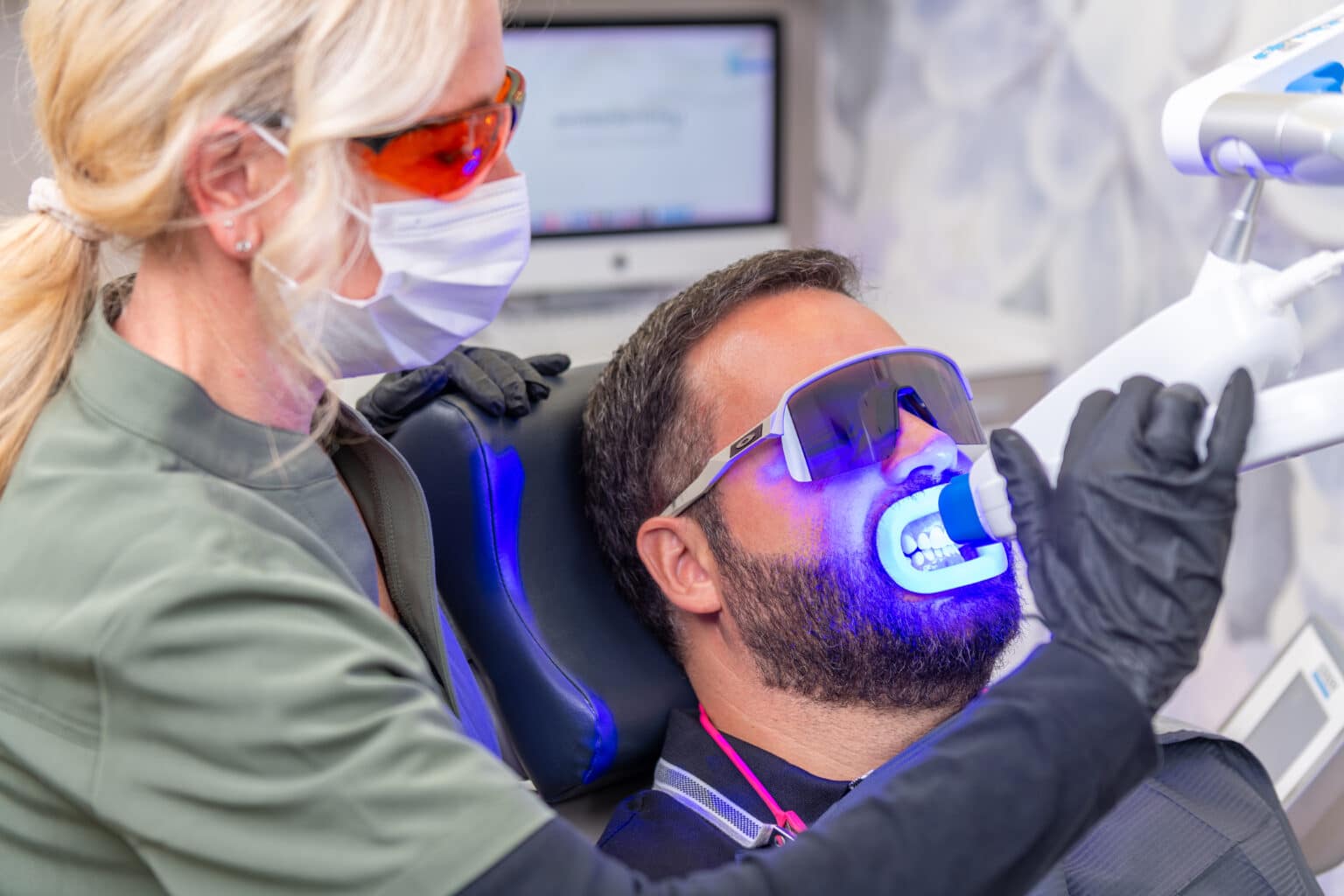
Teeth whitening – clearly explained
What does bleaching mean?
Bleaching chemically lightens natural teeth. A gel alters pigments within the tooth; it does not apply a white coating. The aim is a lighter tooth colour. The extent of the change depends on factors including the initial colour and the cause of discolouration. [1]
Teeth whitening is usually an aesthetic wish: you may want to smile more freely again and feel more comfortable with the colour of your teeth. A darker natural tooth colour is not in itself a disease. Dental health, expectations and possible limitations should therefore be discussed before deciding. You can find our practice service on the smileDentity teeth whitening treatment page.
On this page
How does bleaching differ from professional teeth cleaning?
A professional dental cleaning removes soft and hard deposits and external staining. This can make teeth look cleaner and brighter without chemically changing their natural base colour. Bleaching, by contrast, affects pigments within the tooth. The two procedures therefore serve different purposes. [4]
First, we assess whether cleaning alone may bring you closer to your desired result. Bleaching does not replace daily dental care or necessary treatment for tooth decay or gum inflammation. A healthy starting point is more important than a particular shade of white.

Why do teeth change colour?
Coffee, black or green tea, red wine, cola and tobacco can contribute to discolouration. [6] [7] External deposits need to be distinguished from discolouration within the tooth. With age, the outer enamel layer can wear down, making the yellowish dentine underneath more visible. Natural tooth colour and other factors also influence individual appearance. [1] [3]
An individual tooth can also appear darker, for example after an injury or root canal treatment. A new, noticeable colour change should be examined before choosing a cosmetic solution. Not every type of discolouration responds equally to whitening. [3]
Medicines such as tetracyclines can cause internal discolouration. Excessive fluoride intake during tooth development can cause white spots (fluorosis). [3] [5]
What types of teeth whitening are there?
The terms mainly describe where and how the gel is used. The appropriate method is chosen based on the findings.
At the dental practice
With in-office bleaching, the gel is used under dental supervision. The gums are protected from the product. Depending on the system, a light source may form part of the procedure; its use alone does not guarantee a better result.
At home with dental supervision
Home bleaching uses custom-made trays with the specified gel. The practice explains how to use them and arranges checks. Do not independently increase the concentration, amount or wearing time. [2]
Internal bleaching: Internal whitening may be an option for certain discoloured, root-treated teeth. The condition of the tooth and its restoration must be assessed beforehand. This approach differs from externally bleaching several natural teeth. [1]
What needs to be checked before whitening?
The teeth, gums and existing restorations are examined. Decay requiring treatment, leaking fillings and inflammation must be assessed first. Mention sensitive teeth, exposed tooth necks and known intolerances. [1]
Cosmetic teeth whitening is not recommended during pregnancy or breastfeeding. For minors, cosmetic bleaching is not a routine treatment option. Individual suitability matters more than the choice of a particular product. [2]
How do we work at smileDentity?
At smileDentity, bleaching is carried out exclusively by our qualified dental hygienists with many years of experience.
Andreas Haas, M.Sc., discusses the dental requirements and your wishes concerning tooth colour with you. As preparation, we examine your teeth and gums at smileDentity. We describe our service on the teeth whitening treatment page ; information about preparatory cleaning is available under professional preventive care. We tailor the approach to your findings.


What can bleaching not achieve?
Fillings, crowns and Veneers do not lighten in the same way. This can create visible colour differences after whitening. Adjusting existing restorations may involve additional work and costs, which should be considered during planning. [1]
Temporary tooth sensitivity and gum irritation are possible. Side effects cannot be completely ruled out, even with proper use. If you experience symptoms during treatment, contact the practice rather than increasing the treatment yourself. [2]
A particular desired shade, complete freedom from pain or a permanently unchanged result cannot be guaranteed. A consultation should also leave room for deciding against a cosmetic change.
What matters after whitening?
Follow the instructions for the method used. How long the lighter colour lasts varies; diet, tobacco and the initial condition can influence subsequent darkening. Repeat treatments should be agreed with the practice. [3]
Harsh home remedies and excessive scrubbing are not gentle alternatives. Discuss suitable care products, particularly if you have sensitive tooth necks. Bleaching changes the appearance of teeth but does not remove the need for daily care. [3]
What costs may be involved?
Cosmetic bleaching is generally paid for privately. The work involved varies with the method and extent of treatment. It should also be clarified whether preliminary treatment or later colour adjustment of existing fillings will be needed. [3]
Before deciding, ask which services the cost estimate covers. The anticipated consultation and treatment costs will be explained to you beforehand. This allows you to weigh the effort and expense against the change you want at your own pace.
Frequently asked questions about teeth whitening (FAQ)
No. Dentist-supervised home bleaching includes an examination, custom-made trays and specific instructions. An arbitrary product from the internet does not replace this professional support. [2]
The colour of existing restorations does not change like that of natural teeth. Possible colour differences should therefore be considered in advance when planning treatment. [1]
There is no guarantee of duration that applies to everyone. Teeth may darken again. Whether and when another treatment is appropriate is assessed individually. [3]
Yes, temporary sensitivity is a possible side effect. Existing symptoms should be discussed beforehand. Report new or persistent symptoms during and after treatment. [2]
With external staining, professional cleaning may already produce a visible change. Whether this is enough or chemical whitening is appropriate depends on the findings and your goal. [4]
Sources
- [1] Bundeszahnärztekammer: Bleaching (Zahnaufhellung)
- [2] NHS: Teeth whitening – medizinische Informationen, Stand August 2025
- [3] KZV Land Brandenburg: Patienteninformation Bleaching / Zahnaufhellung
- [4] KZBV: Professionelle Zahnreinigung
- [5] American Dental Association: Fluorosis
- [6] Kim et al.: Effects of tea and coffee on tooth discoloration – Laborstudie, 26.09.2024
- [7] Yay Kuscu und Gorus: Cola consumption and tooth discoloration – klinische Pilotstudie, 03.06.2025
Sources and links last editorially checked on: 14 October 2026.
Questions about your tooth colour?
Would you like to know which whitening options may be suitable for you? Arrange an appointment at our practice in Dreieich. We discuss the possibilities, limitations and anticipated costs.
Medical review: Clinical approval confirmed on 8 November 2026 by Andreas Haas, M.Sc. (dentist at smileDentity Dreieich).