

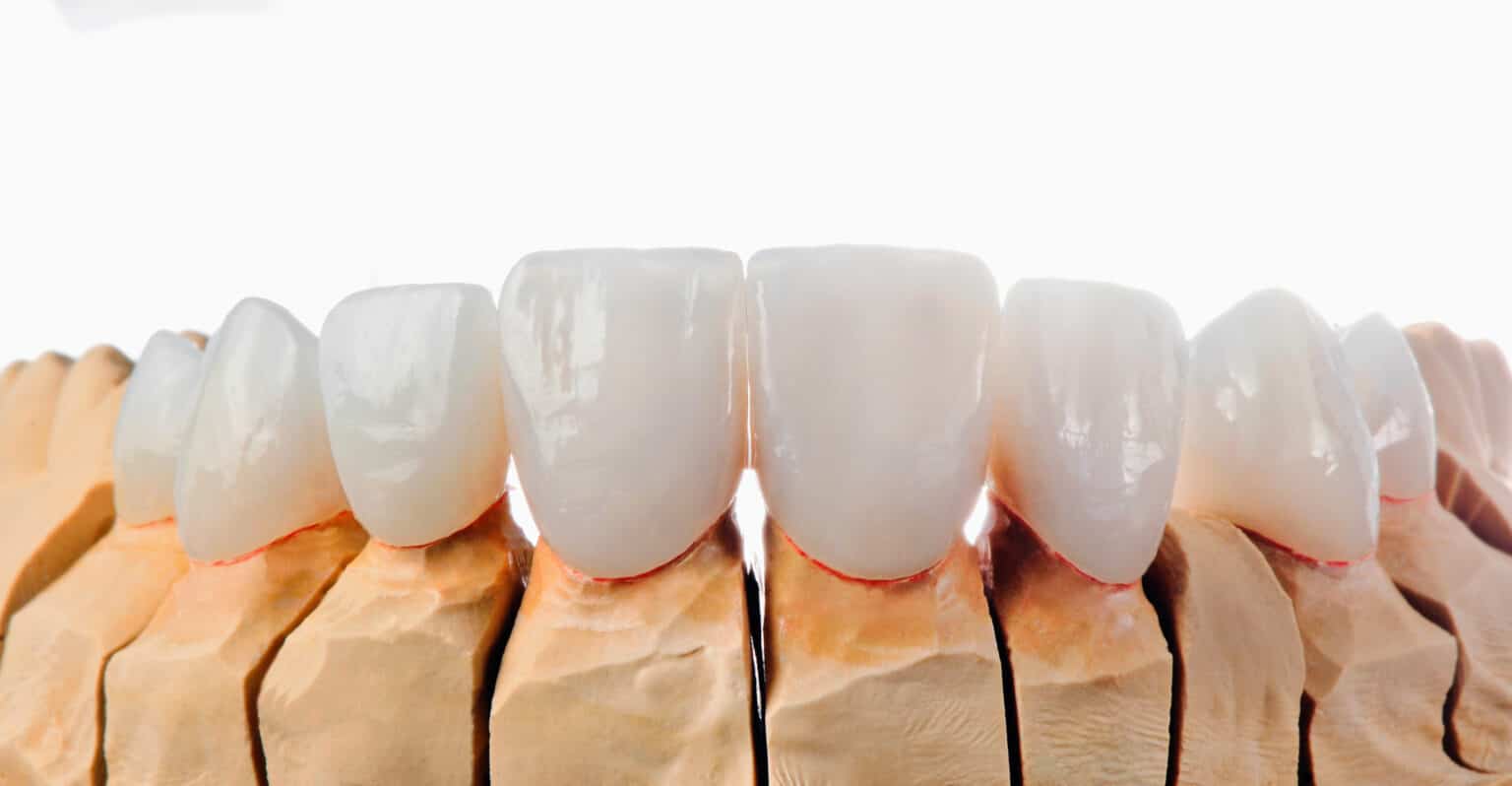
Veneers – clearly explained
What are veneers?
Veneers are thin coverings bonded to the visible surface of a tooth. They can change colour, shape and proportions. They are often made from individually crafted ceramic. Tooth-coloured resin, known as composite, can also be used for veneers. [1]
Wanting to feel more comfortable with your smile may be a reason to consider them. Veneers should suit the teeth, lips and face. The lightest possible shade is not automatically the best solution. Before deciding, dental health, the bite and the desired change are assessed together. Information about the broader area is available on our page about all-ceramic reconstructions at smileDentity.
On this page
When might veneers be considered?
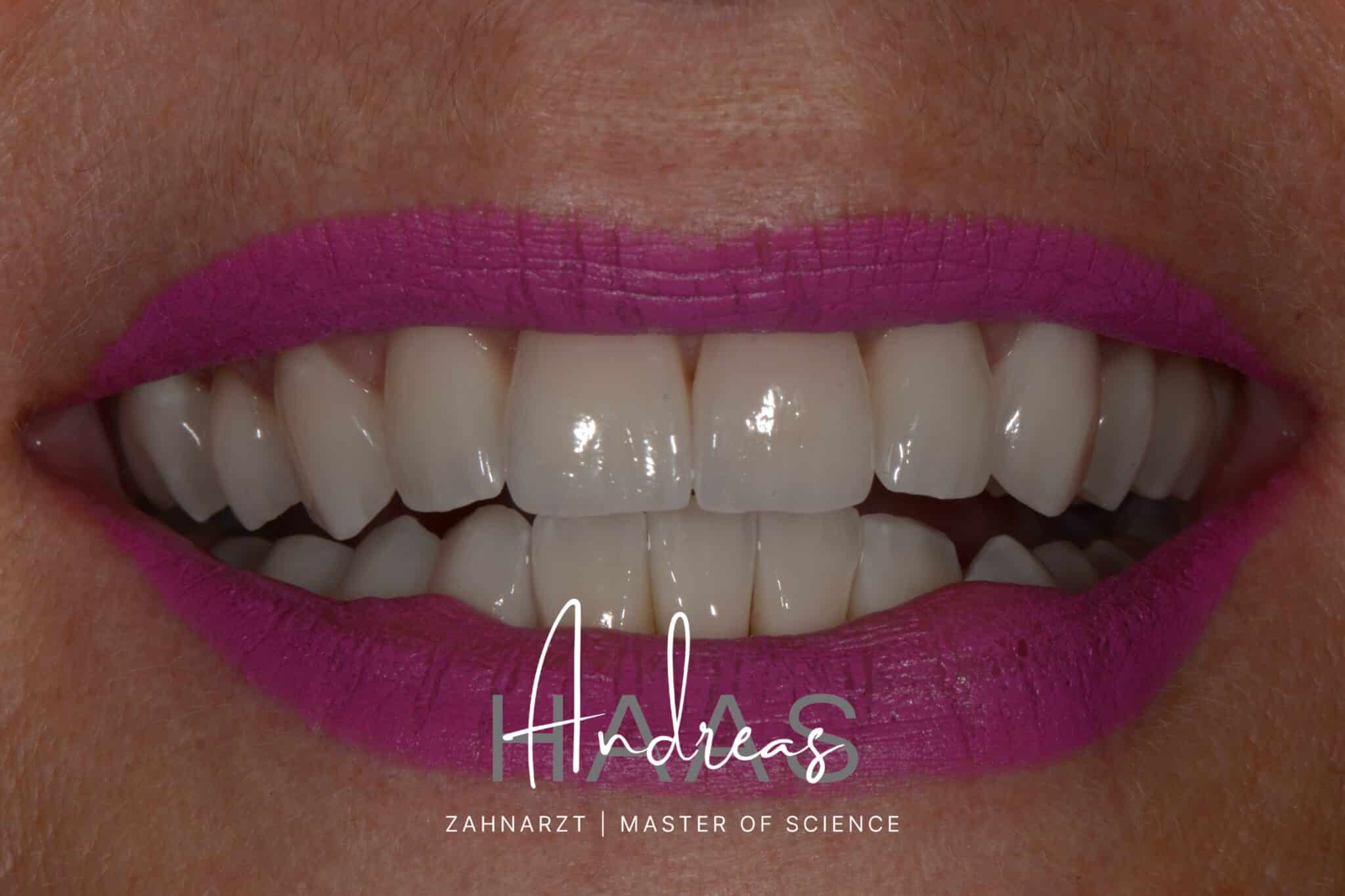
Possible reasons include bothersome discolouration, including staining caused by medicines such as tetracyclines, where bleaching is not expected to provide sufficient colour correction. [4] Other reasons include visible enamel defects, chipped edges or front teeth that are too small, pointed, asymmetrical or shortened. Smaller gaps, such as a gap between the incisors (diastema), can also be visually closed in selected cases. Whether a veneer is suitable depends on the individual tooth and the dentition as a whole. [2]
Minor misalignment may sometimes be disguised. However, veneers do not move tooth roots and do not replace necessary orthodontic treatment. With substantial loss of tooth structure or unfavourable loading, another approach may be more appropriate. A functionally sound foundation comes first.
Ceramic or composite?
Both materials are colour-matched to the planned restoration. They differ in aspects including fabrication, repair options and long-term maintenance requirements. The choice should be guided by the initial situation. [1]
Ceramic veneers
These veneers are individually fabricated and bonded to the tooth. Ceramic can provide a natural response to light and is relatively colour-stable. Nevertheless, edges may chip or veneers may become detached.
Composite veneers
Tooth-coloured resin can be shaped directly on the tooth. Corrections and repairs are often easier, while staining and wear may be more of a factor. Find out more under aesthetic front tooth fillings.
What needs to be checked first?
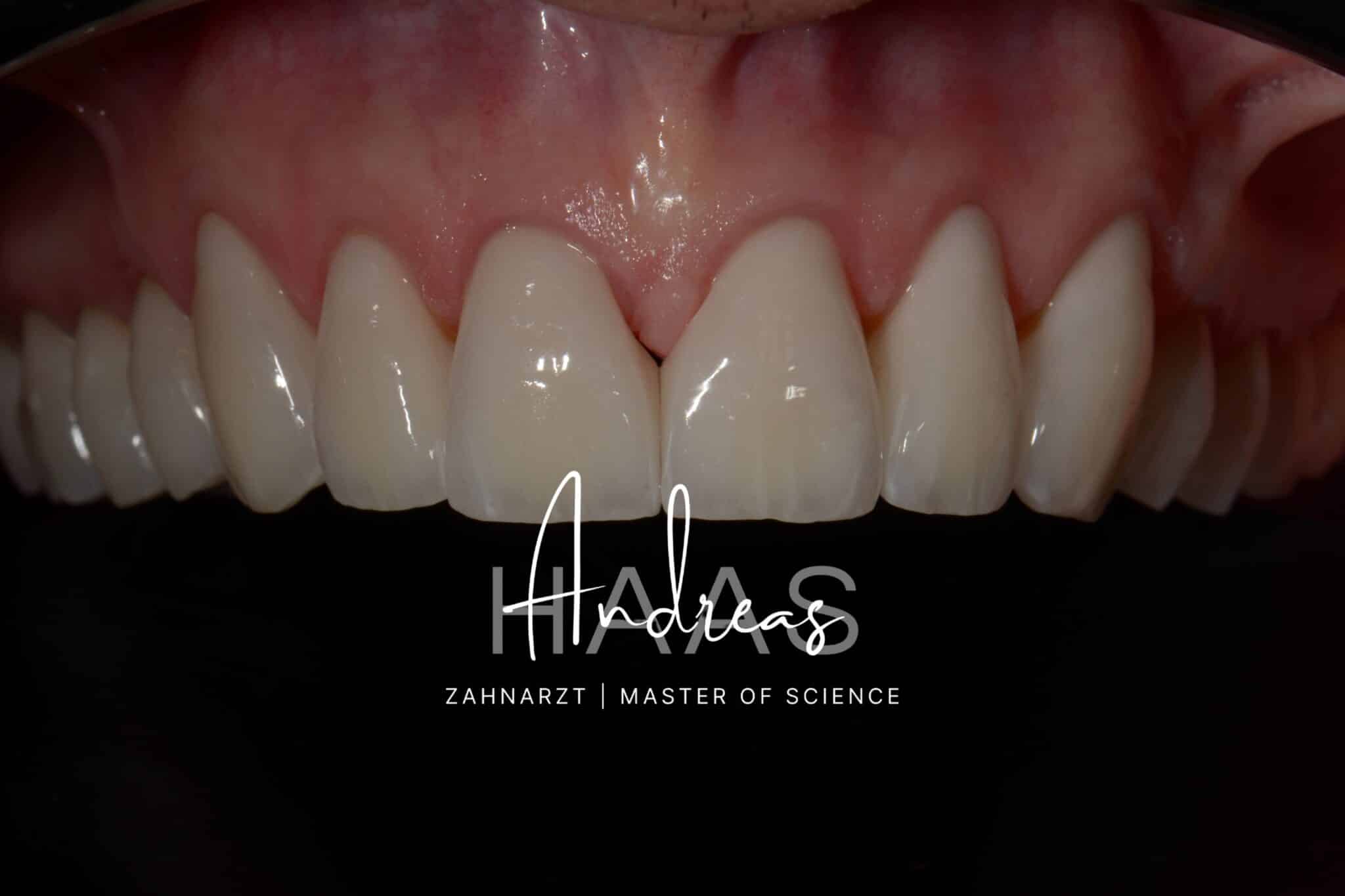
Tooth decay, inflamed gums and leaking restorations must be assessed before aesthetic treatment. Existing fillings, the amount of healthy enamel and how the teeth work together also influence planning. Heavy grinding or clenching can increase the risk of damage. [1]
Explain specifically what bothers you and what change you expect. Photos or a preview can help communication but do not guarantee an identical result. Sometimes a smaller correction to individual teeth is sufficient. Deciding against purely cosmetic treatment is also an option.
How are veneers attached?
For ceramic veneers, the planned shape and colour are established first. Depending on the findings, enamel is removed and impressions of the teeth are then taken. After fabrication, we check the fit and appearance before bonding the veneers with a suitable luting material. [1]
So-called non-prep or minimal-prep approaches are suitable only for certain initial situations. The name alone promises neither complete preservation of tooth structure nor a freely reversible treatment. Enamel that has been removed does not grow back. The extent and consequences of preparation must therefore be explicitly discussed during informed consent.
How do we work at smileDentity?
At smileDentity, Andreas Haas, M.Sc., discusses your wishes concerning shape and colour alongside the findings relating to your teeth and bite. Our planning considers the remaining tooth structure and alternatives. Further information is available about all-ceramic restorations and aesthetic front tooth fillings. We assess individually which restoration is suitable.
Veneers at smileDentity: consultation, planning and treatment
What limitations should you know about?
Possible problems include temporary or persistent sensitivity, chipping, fractures or loss of adhesion. A tooth fitted with a veneer can still develop decay. Repairs or later replacement may require further treatment and expense. A specific lifespan cannot be guaranteed. [2]
If tooth colour is the main concern, Bleaching may be an alternative. Smaller defects may be corrected with composite, while misalignment can be treated orthodontically. A crown covers more of the tooth and should be considered particularly where a corresponding amount of tooth structure has been lost. These options are not freely interchangeable.
What matters after the restoration is fitted?
The natural teeth beneath veneers still need careful care: brushing twice a day with fluoride toothpaste and cleaning between the teeth daily. Check-ups help assess the margins, gums and bite. Avoid using your front teeth to open or chew hard objects. [2]
If you grind your teeth, an individually recommended splint may form part of protecting the restoration. Contact us if your bite feels unfamiliar, an edge becomes sharp or a veneer loosens. Do not glue detached pieces back on yourself.
How are the costs planned?
The work involved depends on factors including the number of teeth, material, preparation and fabrication. Purely cosmetic veneers are generally paid for privately. Whether insurance covers any services in your particular case should be clarified beforehand.
Ask which preliminary treatments, temporary restorations and check-ups are included in the cost estimate. Possible later repairs are also part of the long-term decision. A flat price without an assessment says little about your actual treatment needs.
Frequently asked questions about veneers (FAQ)
Limited preparation is often necessary. Whether and how much enamel is removed depends on the tooth and the approach. Non-prep veneers are suitable only for selected situations; removed enamel does not grow back.
This varies individually. Material, loading, care and the initial findings affect longevity. Veneers may last many years but need regular checks. Repair or replacement remains possible; a fixed number of years is not a guarantee. [2]
Ceramic and composite do not change colour like natural teeth. If whitening the other teeth is planned, colour matching should be discussed before the restorations are fitted. [3]
Grinding and clenching increase the load. Whether veneers are appropriate and which protective measures are needed must be assessed individually. A splint can reduce risks but cannot guarantee that no damage will occur. [1]
No. A veneer mainly covers the visible tooth surface; a crown covers considerably more tooth structure. The appropriate restoration depends particularly on the remaining tooth and its ability to withstand loading. [1]
Sources
- [1] American Dental Association: Veneers – Patienteninformation
- [2] Cleveland Clinic: Dental Veneers – medizinisch geprüfte Patienteninformation, Stand 18.07.2022
- [3] Bundeszahnärztekammer: Bleaching (Zahnaufhellung)
- [4] KZV Land Brandenburg: Bleaching / Zahnaufhellung – Grenzen bei medikamentösen Verfärbungen, Patientenflyer ohne Datumsangabe
Sources and links last editorially checked on: 14 October 2026.
Find a suitable solution for your front teeth.
At our practice in Dreieich, we discuss your wishes, the remaining tooth structure and suitable alternatives. Together, we clarify the possibilities, limitations and anticipated costs.
Medical review: Clinical approval confirmed on 8 November 2026 by Andreas Haas, M.Sc. (dentist at smileDentity Dreieich).