

Front tooth filling with composite
What is a front tooth filling?
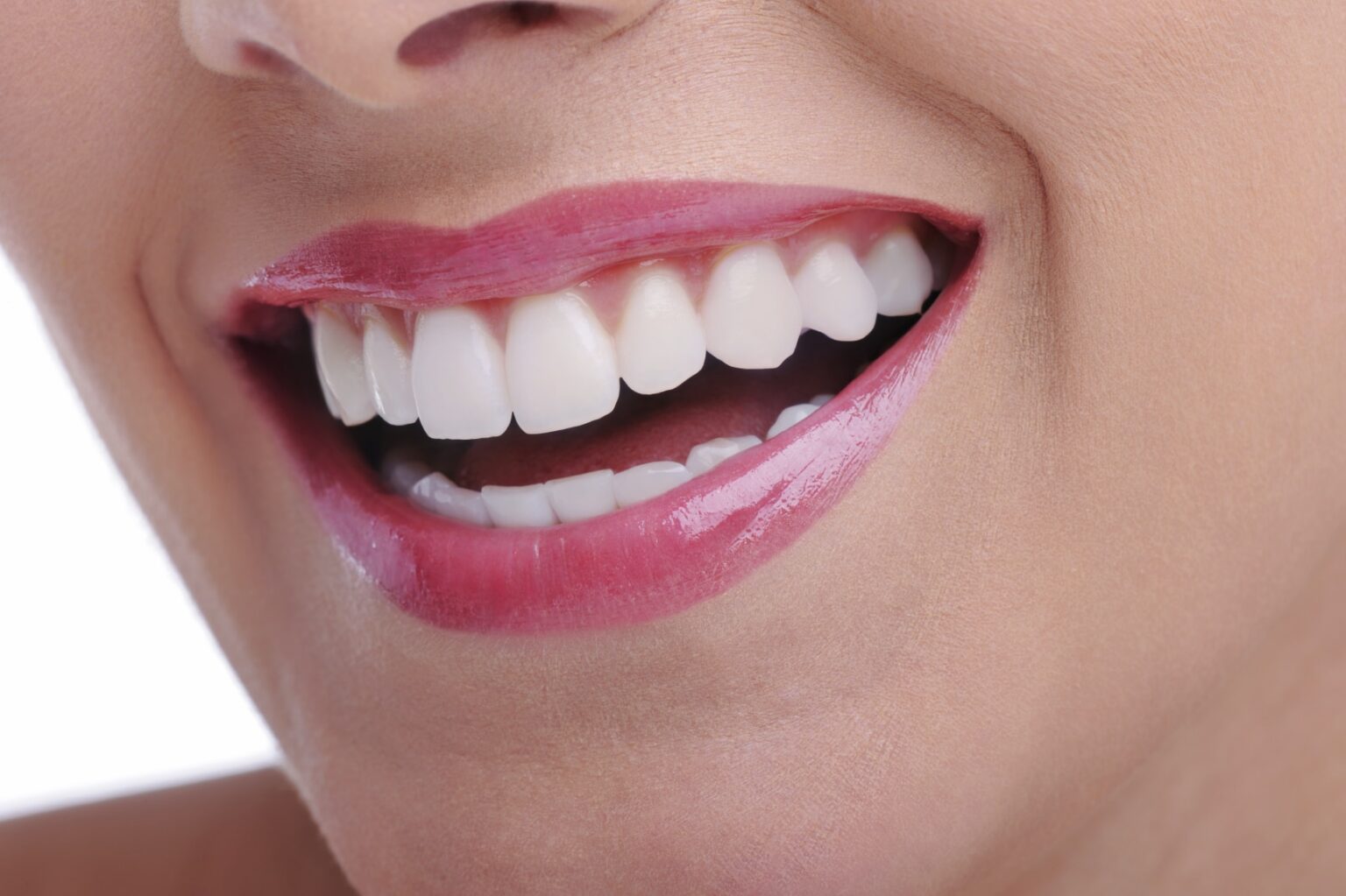
A Front tooth filling is a direct restoration of an incisor or canine using tooth-coloured composite. Built up on the tooth and light-cured, the material treats decay, chipped corners and selected shape irregularities as naturally and conservatively as possible.
A visible defect can affect you when speaking and smiling. At smileDentity in Dreieich, we match colour, shape, translucency and surface texture to the neighbouring teeth. A working field protected from saliva supports adhesive procedures; find out more: Isolation with a rubber dam at smileDentity.
About the treatment
When is an aesthetic front tooth filling an option?
Composite can serve medical and aesthetic purposes in front teeth:
- for decay, including between front teeth,
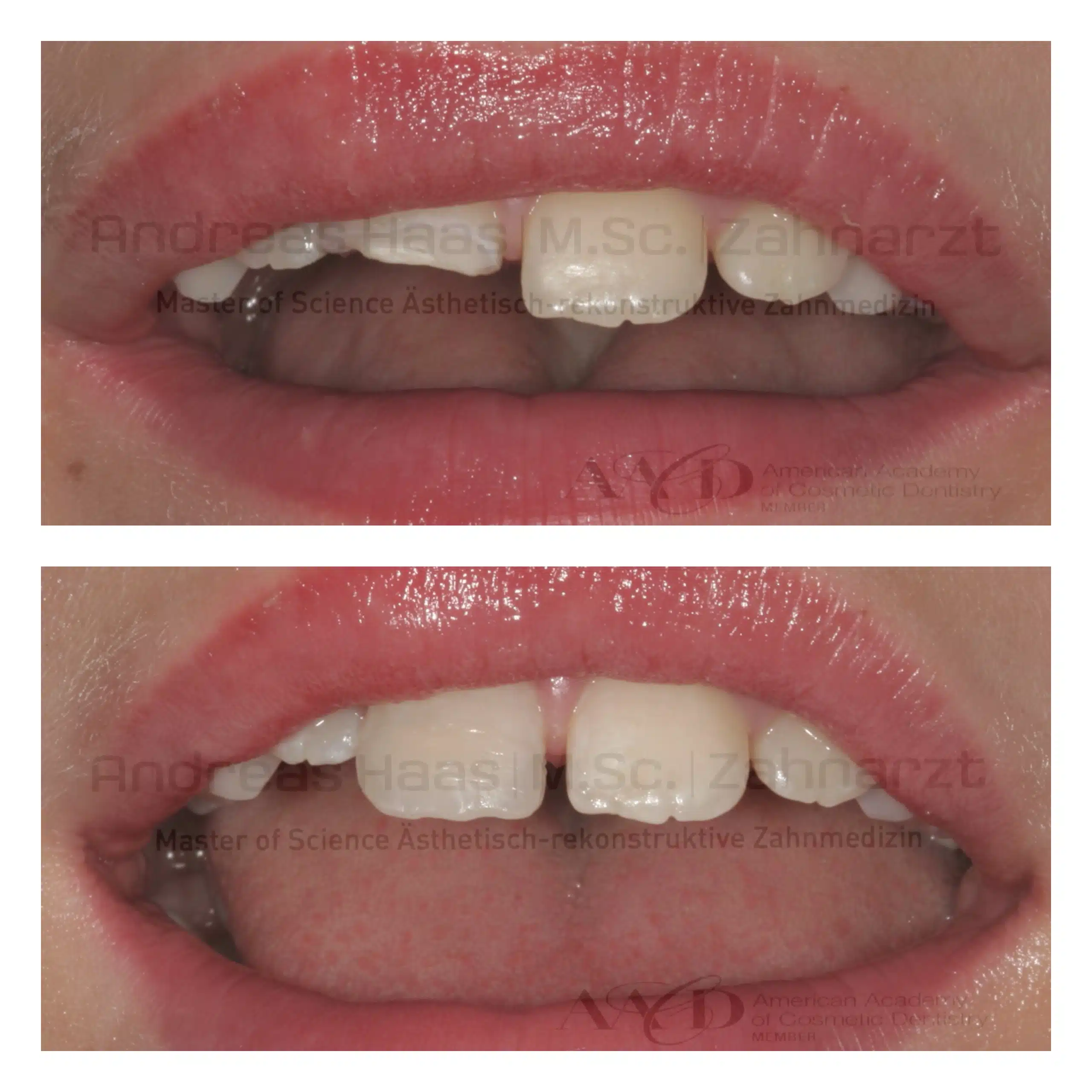
- for chipped corners after a fall or dental trauma,
- for selected colour and shape corrections and closing a gap (diastema),
- to replace discoloured resin fillings where refurbishment is insufficient,
- to match colour and contour in malformed teeth,
- to visually correct minor positional irregularities by adjusting the visible tooth shape.
A composite correction changes the visible shape but does not move the tooth. An orthodontic assessment is needed for an actual change in position. Our recommendation depends on the defect, remaining tooth structure, bite and your treatment aim.
Material and design
Natural-looking aesthetics with composite
Enamel and dentine differ in colour, translucency and light refraction. Coordinated composite materials can reproduce a natural sense of depth. The number and type of materials and effects depend on the defect and individual tooth aesthetics.
At smileDentity, we use Enamel Plus HRi and the anatomical layering technique developed by Dr Lorenzo Vanini. For HRi Universal Enamel the manufacturer describes a refractive index matching tooth enamel. This is a manufacturer statement about this material, not a general property of composites. [4]
We apply dentine, enamel and, where needed, effect materials in layers. Using magnifying loupes, we assess contours, transitions and surfaces. The S3 guideline recommends direct composite restorations for Class III/IV defects and minimally invasive or non-invasive elective shape corrections; ceramic veneers remain an alternative. [1]
Suitable shape corrections can be performed largely by adding material, thereby preserving most healthy tooth structure. If your findings allow, we can coordinate the colour and shape of several front teeth in one session. For larger defects or changes, all-ceramic veneers or other restorations may be more appropriate.
Assessing durability individually
The German Society for Aesthetic Dentistry gives 10 to 15 years or more as a general guideline for carefully placed composite fillings, not a guarantee. Size and location, bite loading, technique, oral hygiene and check-ups influence the actual service life. [2]
Repairing and repolishing
Moisture control, an appropriate adhesive system, sufficient light curing and polishing contribute to quality. Composite can be repaired: depending on the findings, smaller defects can be added to and surface discolouration polished away. Not every change requires complete replacement.
Treatment process
Your front tooth filling at smileDentity: the process
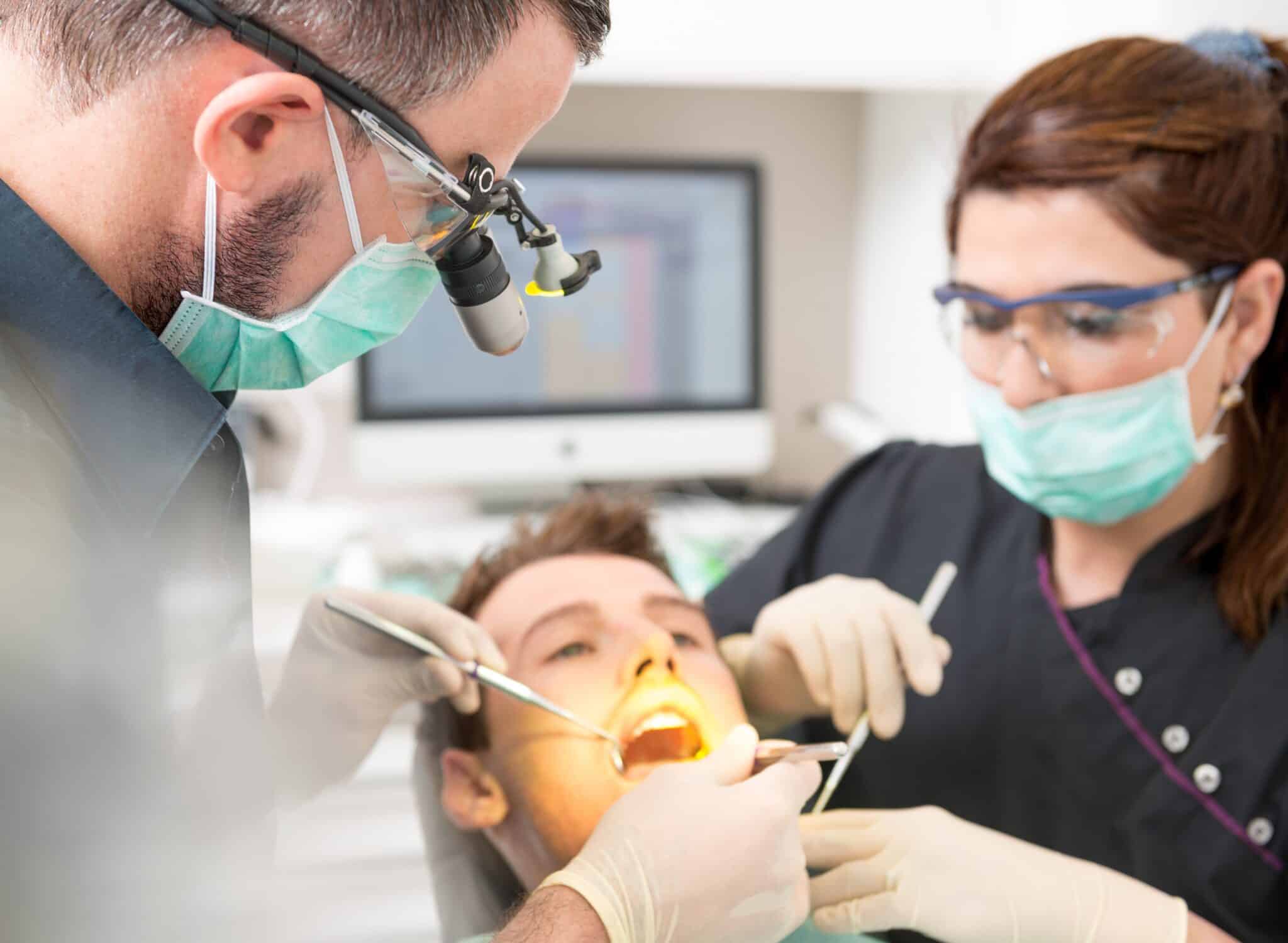
A front tooth filling can often be completed in one session. For more extensive reconstructions or preliminary treatment, we arrange further appointments according to the findings.
01
Assessment and shade selection
Before isolation, we assess shape, tooth structures and colour layering under suitable lighting. The natural colour can be assessed more reliably while the tooth is still moist. For Enamel Plus HRi, we select suitable dentine and enamel shades, translucency and, where appropriate, effects.
02
Anaesthesia and rubber dam
Whether local anaesthesia is necessary depends on the defect and sensitivity. At smileDentity, we use computer-controlled STA single-tooth anaesthesia. With the intraligamentary technique, anaesthesia is directed at the supporting tissues of the affected tooth. This keeps the anaesthesia localised, aiming to avoid widespread accompanying numbness of the lip, cheek or tongue as far as possible. The rubber dam keeps saliva away and supports adhesive procedures.
03
Preparing the defect and establishing the bond
We prepare the defect as conservatively as possible and remove decay requiring treatment. Depending on the adhesive system, enamel etching and bonding agents establish the bond between tooth structure and composite; dentine treatment follows the chosen system.
04
Anatomical build-up using the Vanini technique
Using magnifying loupes, we anatomically rebuild missing tooth structure with the selected composite materials. In larger reconstructions, a rear enamel wall may be created first. Suitable dentine, enamel and, if needed, effect materials follow; each layer is light-cured according to the material instructions. [4]
05
Shaping, polishing and checking
Finally, we shape the restoration and polish it to a high gloss. After removing the rubber dam, we check and, where necessary, adjust the bite, function and transitions to neighbouring teeth.
Making an informed choice
Possibilities and limitations of composite
The suitability of composite depends on the findings:
- High loads, certain bite relationships or teeth grinding can contribute to wear and chipping; we assess suitability and protective measures individually.
- Composite surfaces may become discoloured, for example by coffee, tea or tobacco; repolishing may help depending on the findings.
- Temporary sensitivity to temperature is possible. Please contact us for a check-up if symptoms persist or worsen.
- For extensive defects or aesthetic changes, we assess composite, ceramic veneers or other restorations.
- Please tell us about any known intolerance to material components before treatment so that we can take it into account when selecting materials. [4]
If you would like treatment with clearly agreed, manageable steps, you can find further information about our phased approach for patients with dental anxiety.
At smileDentity
How do we work at smileDentity?
Andreas Haas discusses with you which direct restoration suits your findings and aesthetic aim. For a demanding front tooth reconstruction, we combine shade selection before isolation with Enamel Plus HRi, Dr Lorenzo Vanini’s anatomical layering technique, work under magnifying loupes and a final check of shape and bite.
Planning and scope depend on your individual findings. You can find further options under Aesthetic dentistry at smileDentity. Before treatment begins, we discuss the procedure and anticipated costs with you.
Frequently asked questions about front tooth fillings in Dreieich (FAQ)
The German Society for Aesthetic Dentistry gives a general guideline of 10 to 15 years or more for composite fillings. This is not a guarantee for an individual restoration. Defect size, loading, technique, oral hygiene and regular check-ups influence the actual service life. Depending on the findings, smaller areas of damage can be repaired. [2]
For medically necessary fillings in front teeth, German statutory health insurance covers only a simple, single-shade composite filling. Special additional aesthetic services, such as elaborate multi-shade layering, may incur extra costs and are agreed in writing before treatment begins. [3]
Composite is suitable for cavities, chipped corners and selected colour and shape corrections. Ceramic veneers may be an alternative for more extensive aesthetic changes. Relevant factors include existing tooth structure, the extent of the change, the bite and the treatment aim. We discuss with you which solution is appropriate and preserves tooth structure as far as possible, based on your individual findings.
Clean your teeth twice daily with a soft toothbrush and clean between them with dental floss or suitable interdental brushes. Regular check-ups and professional teeth cleaning tailored to your risk support long-term preservation. Coffee, tea, tobacco and other strongly staining products can contribute to surface discolouration. We discuss individually whether repolishing is appropriate and which advice applies immediately after treatment.
Whether local anaesthesia is necessary depends on the defect and individual sensitivity. Superficial corrections may be possible without anaesthesia. At smileDentity, we use computer-controlled STA® single tooth anaesthesia for local anaesthesia. The intraligamentary technique targets the tissues supporting the affected tooth and aims to minimise widespread numbness of the lip, cheek or tongue. If you are anxious about treatment, we plan each step with you.
Sources for clinical context
- [1] DGZ/DGZMK: S3-Leitlinie Direkte Kompositrestaurationen, Langfassung, Version 2.0 (Stand 26.01.2024; gültig bis 25.01.2029).
- [2] Deutsche Gesellschaft für Ästhetische Zahnmedizin: Komposit-Füllungen – Patienteninformation.
- [3] Kassenzahnärztliche Bundesvereinigung: Welche Zahnfüllungen gibt es? Stand Januar 2025.
- [4] Micerium: ENA HRi esthetic restorative system – Instructions for use, Version V6.2_2021-04.
Sources and links last editorially reviewed on: 20 October 2026.
Arrange an appointment.
We discuss your findings, suitable alternatives and the work involved; you receive transparent information about costs and a cost plan.
Medical review of the German source: On 28 October 2026, this content was reviewed by Andreas Haas, M.Sc. (dentist at smileDentity Dreieich) for medical accuracy, currency and scientific basis.